
Doing More with Less: EAC signals fiscal discipline with $110.8 million budget amid rapid expansion
The financial plan signals a period of strategic consolidation and adaptation for a bloc that has rapidly expanded its geographic and demographic footprint in recent years.
TUESDAY June 30, 2026

By Patty Magubira
The Tranquility News Reporter, Tanzania
The East African Legislative Assembly (EALA) officially approved a $110.8 million East African Community Budget for the 2026/27 fiscal year recently.
This follows Chairperson of the East African Community (EAC) and Uganda’s Minister for East African Affairs Rebecca Kadaga presenting a budget proposal to the House about a week ago.
When analysing the figure against historical trends and the current reality of the eight partner states, several key insights emerge.
This financial plan signals a period of strategic consolidation and adaptation for a bloc that has rapidly expanded its geographic and demographic footprint in recent years.
Despite the entry of new member nations, the approved funding represents a highly disciplined fiscal approach when compared to historical trends and the bloc’s current regional realities.
This budget remains remarkably consistent with the 2025/2026 one, which stood at approximately $109.3 million.
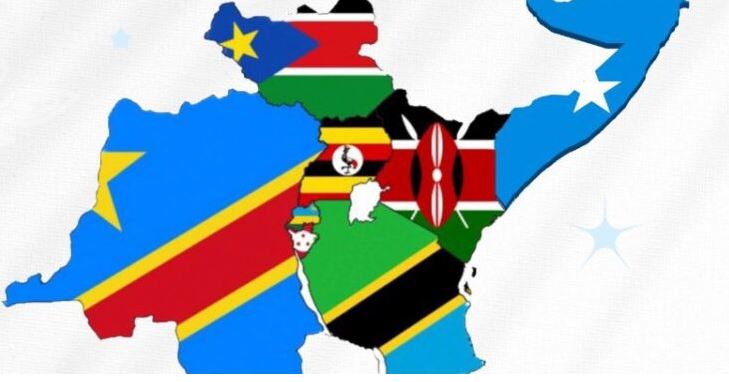
Since 2022, the EAC has expanded significantly by adding both the Democratic Republic of the Congo (DRC) and the Federal Republic of Somalia. However, the central budget has not seen a proportional or exponential increase to match this massive expansion.
This flat budgetary trend must now support a massive eight-partner state alliance consisting of Burundi, DR Congo, Kenya, Rwanda, Somalia, South Sudan, Tanzania, and Uganda.
Rather than opting for massive bureaucratic expansion to match its geographic growth, the EAC Secretariat is apparently prioritising efficiency and organisational transformation.
By keeping the budget relatively flat in nominal terms while simultaneously absorbing millions of new citizens into the community, the EAC is shifting its operational philosophy towards ‘doing more with less’.
To bridge the gap, the bloc is expected to heavily leverage digital systems and centralised regional frameworks to drive integration without spiking operational costs.
The financing structure of $64.7 million, equivalent to 58 per cent, from partner states, and $46.1 million, equivalent to 42 per cent, from development partners highlights a critical ongoing evolution.

Historically, regional bodies in Africa have been heavily reliant on donor funding. The 58/42 split demonstrates a clear, incremental push towards self-reliance.
The addition of new member states complicates the ‘fair share’ contribution formula. As the community grows, the pressure on the original three (Kenya, Tanzania, and Uganda) to anchor the budget is being redistributed, though this transition is a delicate diplomatic and fiscal challenge.
The 2026/27 budget is clearly designed to address the challenges of an enlarged market rather than just the costs of managing it.
The emphasis on ‘digital transformation’ and the success of the digital customs bond system are not just technological upgrades; they are fiscal tools.
By digitising trade, the EAC reduces the administrative burden of monitoring borders, which helps to manage the community with a fixed budget despite the increased volume of trade to $19.3 billion in 2025.
The allocation towards regional centres of excellence (health) and mobile laboratories indicates that the EAC is shifting its budget towards high-impact, visible services that provide immediate value to citizens.

This is a strategic move to maintain political support for the integration agenda across all eight states.
The budget has been approved against a backdrop of global economic headwinds—specifically high fuel and logistics costs tied to geopolitical tensions.
While the EAC budget is relatively small compared to the combined national budgets of its member states, its role is coordinating, not replacing, national spending.
The primary criticism levelled against the bloc’s fiscal approach is the ‘fragmentation’ caused by national budgets that sometimes contradict regional integration commitments.
Therefore, the $110.8 million is less a reflection of the EAC’s total ‘spending power’ and more a reflection of its operational capacity to harmonise the policies of its eight diverse member states.
The bottom line, therefore, is that the 2026/27 EAC Budget signifies a shift from ‘integration by expansion’ to ‘integration by efficiency’.

The community is focusing its limited regional funds on technological and security infrastructure that eases the cost of doing business, effectively allowing the EAC to scale its impact without needing to exponentially increase its annual contributions.
The budget balances an ambitious integration agenda with a fundamental structural overhaul of how member states finance the bloc.
The most significant change for the 2026/27 cycle is the move away from an equal-contribution model towards a hybrid financing framework, scheduled to take effect on July 1, 2026.
Previously, a large majority of 65 per cent of the member-state share was divided equally among all countries, regardless of their economic size.
This placed a disproportionate burden on smaller economies and incentivised defaults, leading to over $80 million in accumulated arrears.
The new model dictates that 50 per cent of the assessed contributions will be shared equally, while the remaining 50 per cent will be indexed to each country’s economic capacity (GDP per capita).

This ensures that larger economies (such as Kenya, Tanzania, and Uganda) contribute a higher absolute amount, reflecting their larger market share and the greater benefits they derive from the customs union.
Conversely, it provides much-needed fiscal relief to smaller or more fragile economies, theoretically improving compliance rates.
The EAC is currently facing a ‘chronic arrears problem’, with outstanding obligations peaking at nearly $80 million, largely driven by the newer member states (DRC, South Sudan, and Somalia).
To prevent this financial strain from stalling integration, the EAC Summit has coupled the new formula with a 50 per cent waiver on accumulated arrears, provided the remaining balances are cleared within two years.
The budget is strategically divided to support both the core operations of the community and its broader integration goals.
The EAC Secretariat receives the largest share of $59.8 million for programmes coordination, followed by the EALA at $19.1 million.

The budget prioritises regional security, intra-regional trade facilitation (via the removal of non-tariff barriers), and digital transformation, which serves as a force multiplier for economic growth without requiring proportional increases in administrative headcount.
Ultimately, this budget is an exercise in ‘realistic integration’.
By formalising a GDP-linked contribution model, the EAC is attempting to transition from a reliance on the goodwill of a few members to a sustainable, predictable funding mechanism that accommodates the diverse economic realities of its eight member nations.
Recommended Posts


The Tranquility News Reporter/Sub Editor, Tanzania
Patty Magubira is an experienced environmental and business editor whose career started at the Tanzania's state-owned newspaper - The Daily News. He is a man of perfection. Aided by his extensive training as a community forestry expert before joining Tanzania School of Journalism. Magubira had successfully held various key posts in newsrooms, giving him an unmatched connections in media fraternity. Having worked as a bureau chief in Arusha and Mwanza, he managed to build a team work, boosting sales to the highest level ever. He was then promoted to a sub-editor after completing a training in Nairobi, Kenya. His incredible experience, critical thinking and exposure are critical to the quality of any media outlet.


