
Tanzanian diplomat Mbundi inherits top EAC job as the trading bloc faces cash crunch
More than $89 million in unpaid contributions threatens to paralyse the regional integration agenda.
SUNDAY March 8, 2026

By Adam Ihucha
The Tranquillity News Correspondent, Tanzania
A veteran Tanzanian diplomat is taking charge of East Africa’s expanding trading bloc as more than $89 million in unpaid contributions threatens to paralyse the institution and test the future of regional integration.
When regional leaders selected Stephen Patrick Mbundi to lead the East African Community, they handed him the top job in one of Africa’s most ambitious regional organisations — and one of its most financially strained.
Mr Mbundi’s appointment comes at a precarious moment for the eight-nation bloc, which has spent two decades positioning itself as a model of African regional integration.
Today, the organisation is struggling with a self-inflicted financial crisis that threatens to stall its operations and test the political commitment of its member states.
As of early March, the East African Community faces more than $89 million in unpaid contributions from member governments.

The shortfall has created what officials describe as a “dire liquidity situation,” forcing the suspension of some activities, delaying staff salaries and prompting an emergency meeting of regional leaders.
The crisis has exposed a central contradiction in the bloc’s expanding ambitions: While its membership and integration agenda have grown rapidly, the willingness — or ability — of some member states to finance the project has lagged behind.
A widening gap between ambition and resources
Founded in its modern form in 1999, the East African Community has often been held up as one of the continent’s most successful experiments in regional cooperation.
The bloc established a Customs Union in 2005 and a Common Market in 2010, allowing freer movement of goods, services and people across borders.
Its leaders have long spoken of even deeper integration, including a monetary union and, eventually, a political federation.

At the same time, membership has expanded steadily. What began with three countries — Kenya, Tanzania and Uganda — now includes eight, with the addition of Rwanda, Burundi, South Sudan, the Democratic Republic of the Congo and most recently Somalia.
The expansion has broadened the bloc’s economic and geopolitical footprint. But it has also complicated the financial model that sustains the institution.
More than 90 per cent of the current arrears, officials say, are owed by four countries — the Democratic Republic of the Congo, Burundi, South Sudan and Somalia — economies facing varying degrees of fiscal strain and political instability.
By contrast, the region’s two largest economies, Kenya and Tanzania, have largely remained current on their payments.
Signs of institutional strain
The consequences of the funding gap are increasingly visible within the organisation’s day-to-day operations.

Members of the East African Legislative Assembly, the bloc’s parliamentary body, have reportedly gone months without allowances.
At the EAC Secretariat headquarters in Arusha, officials say they have struggled to pay staff salaries, including those due in February.
Some programmes have been delayed or suspended as the organisation tries to conserve resources.
For a bloc that has sought to present itself as an emerging economic hub for East and Central Africa, the situation has raised uncomfortable questions about sustainability.
Analysts warn that prolonged financial instability could weaken the credibility of the integration project.
A politically sensitive appointment
Mr Mbundi’s selection as secretary general carries political significance as well.

Under the bloc’s rotational leadership arrangement, the position was widely expected to go to South Sudan. But regional leaders instead chose the Tanzanian diplomat, a decision widely interpreted as reflecting frustration among some member states over unpaid financial obligations.
South Sudan’s President Salva Kiir did not attend the summit where the appointment was made, sending his foreign minister in his place.
Mr Mbundi brings extensive experience in regional diplomacy. Before his appointment, he served as permanent secretary in Tanzania’s Ministry of Foreign Affairs and East African Cooperation, overseeing the country’s engagement with the regional bloc and representing it in high-level negotiations.
In a statement welcoming his appointment, Tanzania’s foreign ministry said he had played a “key policy and administrative role” in advancing regional cooperation.
Trade growth offers a counterpoint
Despite the financial challenges, the economic rationale for the bloc remains strong.

Trade among member states has been growing steadily. Intra-regional commerce reached nearly $40 billion in 2025, up from about $28.2 billion the previous year, accounting for roughly 15 per cent of the region’s total trade.
The growth has been driven in part by the Customs Union and Common Market arrangements, which have reduced trade barriers and improved border clearance procedures.
Manufactured goods such as textiles, cement and edible oils increasingly dominate trade flows within the region, signaling the gradual development of regional supply chains.
Supporters of the integration project argue that these gains demonstrate the long-term value of the institution, even as it struggles with immediate financial pressures.
Echoes of an earlier collapse
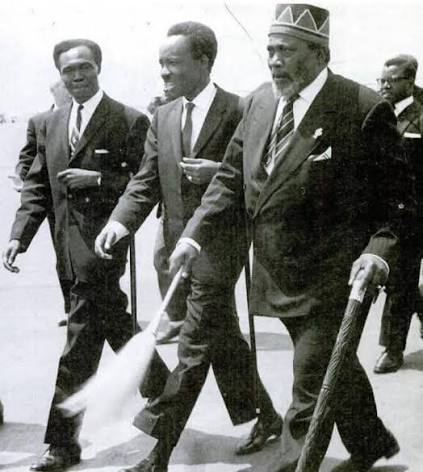
Still, the current crisis has revived memories of the earlier collapse of the original East African Community in 1977, when political disputes and economic disagreements among member states brought the organisation to an abrupt end.
The modern bloc was revived more than two decades later, and its institutional framework is widely seen as more resilient.
But analysts say the latest financial difficulties serve as a reminder that regional integration ultimately depends on sustained political commitment.
For Mr Mbundi, that commitment may prove to be his most important resource.
As he assumes leadership of the bloc, his immediate challenge will not only be advancing the region’s long-term integration agenda.
It will also be persuading member governments to meet the obligations that keep the institution functioning — and ensuring that one of Africa’s most ambitious regional projects does not falter under the weight of its own ambitions.
Recommended Posts


Adam Ihucha is a prominent Tanzanian journalist and author recognized for his extensive coverage of tourism, wildlife conservation, and economic issues in East Africa. Based in Arusha, he serves as a senior correspondent for The Tranquility News and is a long-time contributor to eTurboNews (eTN), where he provides global insights into Tanzania's travel industry.
Throughout his career, Ihucha has written for several major publications, including The Guardian (Tanzania) and The EastAfrican. His work frequently highlights the intersection of environmental conservation and economic development, covering critical topics such as anti-poaching initiatives, national park management, and regional trade within the East African Community. His journalism is noted for its advocacy for sustainable tourism and its role in documenting the achievements of Tanzania's tourism sector.
Email contact: ihucha@tranquilitynews.com


