
Could Kenya’s new tourist insurance rule give Tanzania an edge in East Africa’s $4 billion safari economy?
The Great Migration will continue crossing the Kenya-Tanzania border. But the movement of tourism dollars is becoming the region’s next major contest.
THURSDAY August 6, 2026
By Adam Ihucha
The Tranquillity News Correspondent, Nairobi, Kenya
Kenya’s decision to require mandatory health insurance for all foreign visitors risks adding pressure to its tourism industry as Tanzania gains ground in East Africa’s increasingly competitive safari market through lower costs, broader travel packages, and stronger destination marketing.
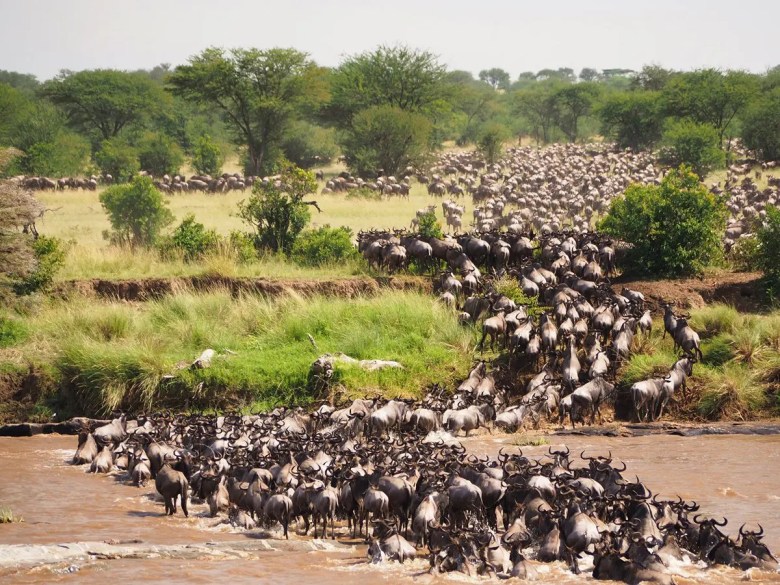
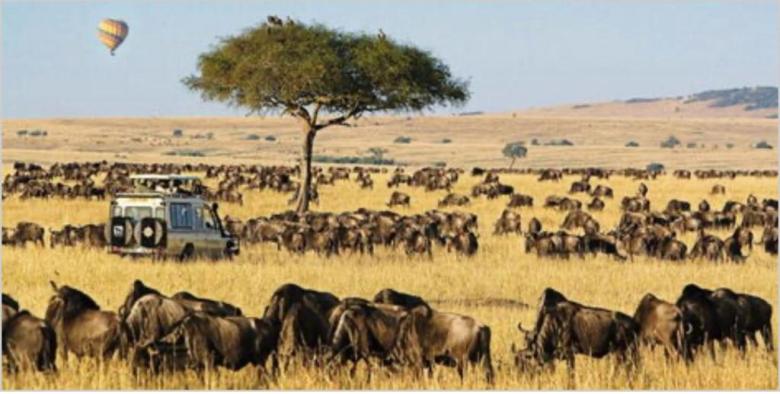
For decades, Kenya and Tanzania shared the economic benefits of the Great Migration, with millions of wildebeest crossing between Kenya’s Maasai Mara and Tanzania’s Serengeti ecosystem, while tourists often combined both destinations in a single itinerary.
But that balance is beginning to shift. As Kenya faces declining visitor numbers at its flagship Maasai Mara National Reserve, Tanzania’s Serengeti has recorded steady growth, highlighting a wider competition for tourism revenue, foreign exchange, and jobs.
Under regulations published in the Kenya Gazette on July 30, 2026, and signed by Health Cabinet Secretary Aden Duale, all international visitors entering Kenya will be required to carry health insurance coverage of at least $50,000.
The policy provides minimum coverage of $20,000 for medical treatment, $25,000 for emergency evacuation, $5,000 for repatriation, $1,000 for mental health services and $300 for medication.
The government says the measure is intended to protect visitors and ensure access to medical care during emergencies.
Tourism operators, however, warn that additional costs could affect Kenya’s competitiveness as travellers increasingly compare the overall price and experience of safari destinations across the region.
Tourism Dollars moving south
Tourism remains a critical pillar of Kenya’s economy, contributing about 7 per cent of gross domestic product directly and close to 10 per cent when wider economic impacts are included.
The industry supports an estimated 1.7 million jobs across hotels, transport, aviation, agriculture, retail, and conservation.
Kenya welcomed about 2.7 million international visitors in 2025, generating approximately 500 billion Kenyan Shillings ($3.9 billion) in tourism earnings.
Tanzania has also experienced strong growth. The Bank of Tanzania reported that tourism revenues reached a record $4.4 billion in 2025, while international arrivals increased by 9.02 per cent to 2.09 million visitors.
The contrasting performance of the two countries’ flagship safari destinations illustrates a changing regional tourism landscape.
According to Kenya’s Economic Survey 2026, visitor numbers to the Maasai Mara declined from 420,000 in 2023 to 343,000 in 2024, before falling further to 213,000 in 2025.
Meanwhile, data from Tanzania National Parks (TANAPA) shows Serengeti National Park visitors increased from 388,865 in 2023 to 430,124 in 2024, reaching 491,398 in 2025.
Tanzania’s full-circuit advantage
Industry analysts say Tanzania’s success is linked to a tourism model built around longer and more diverse safari experiences.
Unlike Kenya’s Maasai Mara-focused packages, Tanzania has developed a broader northern tourism circuit connecting Serengeti, Tarangire, Lake Manyara, Arusha, and Kilimanjaro national parks as well as Ngorongoro Conservation Area.
When tourists compare paying $200 for Maasai Mara against around $83 for Serengeti, the calculation becomes straightforward. For a family of four, the savings can be substantial, while Tanzania also offers more parks and longer itineraries.” East African safari operator working with European clients.
The model encourages longer stays and spreads tourist spending across multiple destinations.
“Tanzania offers tourists a complete northern circuit experience,” said Tim Mdinka, Arusha-based safari operator.
“A visitor can spend seven to 10 days moving across different parks and ecosystems without repeating the same product,” he explained.
Kenya’s Maasai Mara remains one of Africa’s most famous wildlife destinations, but operators say travellers are increasingly evaluating the total cost and overall experience rather than choosing destinations based only on reputation.
The cost competition
The new insurance requirement comes after Kenya increased conservation fees at the Maasai Mara.
Since January 2024, international visitors have paid between $100 and $200 per day during peak migration periods, compared with the previous flat rate of $80.
By comparison, Serengeti entry fees are about $83 per international visitor, giving Tanzania a pricing advantage for many travellers.
Tour operators say those differences become significant for families and groups planning expensive safari holidays.
“When tourists compare paying $200 for Maasai Mara against around $83 for Serengeti, the calculation becomes straightforward,” said one East African safari operator working with European clients.
“For a family of four, the savings can be substantial, while Tanzania also offers more parks and longer itineraries.”
Conservation pressures
Beyond pricing, Kenya faces environmental challenges in the Maasai Mara ecosystem.
Conservation experts have warned that land fragmentation, fencing, agricultural expansion, and settlement growth are disrupting wildlife corridors that have historically supported migration patterns.
Tanzania has benefited from maintaining large connected conservation landscapes around the Serengeti ecosystem, although it also faces the challenge of managing rising visitor numbers while protecting fragile environments.
Regional tourism race
Kenya has long been one of Africa’s leading safari destinations, helped by the global reputation of the Maasai Mara, strong aviation links and an established hospitality industry.
But Tanzania has increasingly narrowed that advantage through competitive pricing, broader tourism offerings, and stronger international branding around Serengeti, Zanzibar, and Mount Kilimanjaro.
The new insurance requirement may improve medical protection for visitors, but tourism analysts say Kenya faces a difficult balancing act: Generating more revenue for conservation and services without making travel costs less attractive.
The Great Migration will continue crossing the Kenya-Tanzania border. But the movement of tourism dollars is becoming the region’s next major contest.
Recommended Posts


Adam Ihucha is a prominent Tanzanian journalist and author recognized for his extensive coverage of tourism, wildlife conservation, and economic issues in East Africa. Based in Arusha, he serves as a senior correspondent for The Tranquility News and is a long-time contributor to eTurboNews (eTN), where he provides global insights into Tanzania's travel industry.
Throughout his career, Ihucha has written for several major publications, including The Guardian (Tanzania) and The EastAfrican. His work frequently highlights the intersection of environmental conservation and economic development, covering critical topics such as anti-poaching initiatives, national park management, and regional trade within the East African Community. His journalism is noted for its advocacy for sustainable tourism and its role in documenting the achievements of Tanzania's tourism sector.
Email contact: ihucha@tranquilitynews.com


