
Olara Otunnu helped shape the race for UN Secretary-General. Now he wants to win It
The Ugandan diplomat’s experience, moral authority, and intimate knowledge of UN power politics make him a formidable candidate—but regional rivalry, demands for the first woman leader, and the Security Council veto may prove decisive
July 30, 2026

By Adam Musa
The Tranquility News Correspondent, North America
Boston, Massachusetts
Olara Otunnu helped invent the quiet machinery that selects secretary-general. Now he wants the job itself.
More than four decades ago, as Uganda’s ambassador to the United Nations and president of the Security Council, Olara Otunnu devised a discreet way to test support for candidates without forcing governments into public confrontation. Informal straw ballots, members signal encouragement or discouragement behind closed doors — became known as the “Otunnu Formula.” Variations of it have guided every secretary-general contest since.
The innovation revealed a quality that has defined his career: an unusually clear-eyed grasp of the gap between the United Nations’ public language and the private reality of power inside it. The organization speaks of principle, equality, and collective purpose. Its consequential decisions are more often settled by regional pressure, historical grievance, quiet bargaining, and the vetoes of five states.
Otunnu’s candidacy is compelling precisely because he understands that contradiction. It may also be constrained by it.
On paper, few candidates match his combination of institutional knowledge, diplomatic range, and moral credibility. He has served as Uganda’s foreign minister, president of the Security Council, chair of the Commission on Human Rights, leader of the Group of 77 in major negotiations, and under-secretary-general for children and armed conflict. He helped transform the abuse of children in war from a humanitarian concern into a matter the Security Council could no longer treat as peripheral.
But a secretary-general is not chosen on paper. They emerge from a geopolitical sorting process in which qualifications matter yet rarely decide the outcome alone. Otunnu must navigate the competing claims of Latin America and the Caribbean, the widespread desire for the first woman in the post, possible divisions within Africa, and the preferences of the permanent members of the Security Council.
The contest is therefore not only about who should lead the United Nations. It is a referendum on what member states believe the institution is for.
The limits of the office
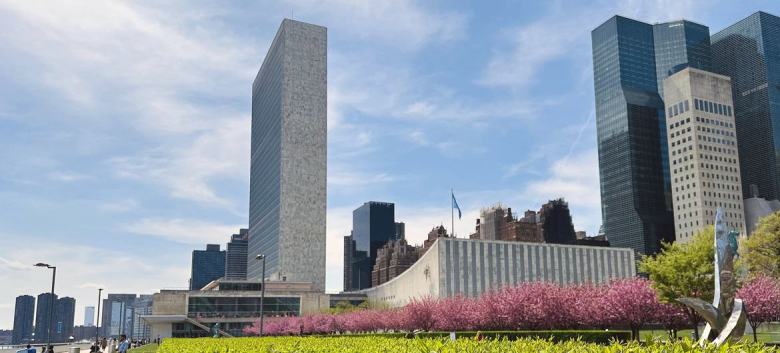
The secretary-general is often called the world’s chief diplomat. The phrase overstates the authority the office actually holds.
A secretary-general cannot order a ceasefire, compel a government to negotiate, deploy forces independently, or enforce the Charter against a permanent member of the Security Council. The role depends on persuasion, access, moral standing, and the occasional willingness of powerful states to be embarrassed.
This structural weakness has shaped every tenure. Dag Hammarskjöld expanded the office’s independence and helped institutionalize peacekeeping, yet the Congo Crisis revealed the perils of acting amid colonial interests and superpower rivalry. U Thant helped ease the Cuban Missile Crisis but could not stop the Vietnam War. Boutros Boutros-Ghali envisioned a more assertive post–Cold War United Nations, only to watch it fail catastrophically in Bosnia, Rwanda, and Somalia. Kofi Annan elevated human rights and development, then was battered by the Iraq War and the moral residue of earlier failures. António Guterres has spoken forcefully on Ukraine, Gaza, Sudan, climate, and inequality while presiding over an institution repeatedly immobilized by the same governments that demand its relevance.
The office carries heavy responsibility and limited command. Otunnu’s career suggests he grasps this better than most. He has spent decades inside the machinery that produces both the UN’s achievements and its evasions. He knows that moral language matters—and that moral language without political leverage can harden into ritual. That understanding forms the core of the case for his candidacy: he would arrive neither dazzled by the office nor naïve about its limits.
Institutional memory and Its ambiguities
Otunnu’s résumé belongs to an earlier generation of international diplomacy when mastery of procedure could still be treated as a form of statesmanship.
As Uganda’s permanent representative from 1980 to 1985, he held an extraordinary range of posts: president of the Security Council, vice president of the General Assembly, chair of the Commission on Human Rights, and chair of the Group of 77 during Law of the Sea negotiations. He later served as foreign minister and president of the International Peace Academy.
His most consequential work came as the UN’s special representative for children and armed conflict. In that role he pressed the organization to recognize that the recruitment of child soldiers, attacks on schools, sexual violence, abduction, and the denial of humanitarian access were not merely tragic by-products of war. They were matters of international peace and security. That shift helped produce the monitoring and reporting system later associated with Security Council Resolution 1612—a durable institutional mechanism rather than a speech or declaration.
Supporters can therefore make a rarer claim: Otunnu has not only worked at the UN; he has altered what the UN considers its responsibility. Yet institutional memory is double-edged. It can be read as wisdom or as distance from the present. The next secretary-general will inherit an organization confronting artificial intelligence, cyber conflict, climate displacement, digital propaganda, financial contraction, bureaucratic duplication, and a world in which many governments no longer feel obliged to pretend that international law constrains them. Otunnu will need to demonstrate that historical understanding is not nostalgia—that he can translate the moral ambition of an earlier United Nations into the administrative and technological demands of this one.
The African precedent
No secretary-general is chosen outside history. Africa knows this better than most regions.
When Boutros Boutros-Ghali emerged as a leading candidate in 1991, the geopolitical atmosphere favored an African. No African had held the office, and the Organization of African Unity had turned that absence into a continental claim. Several African candidates competed, but the underlying political demand was larger than any one name: after decades in which African conflicts, decolonization struggles, and development crises had occupied the UN’s agenda, Africa argued that it was entitled to lead the institution.
Boutros-Ghali’s selection reflected his diplomatic stature, Egypt’s strategic position, and the end of the Cold War. It also reflected regional pressure. Five years later, the precedent was tested. Boutros-Ghali sought a second term and retained broad support, including formal backing from the OAU. The United States vetoed him. African governments then faced a choice between defending their preferred candidate and preserving the broader principle that the office should remain African. They chose the principle. Kofi Annan, a Ghanaian UN insider with deep institutional experience and greater acceptability in Washington, emerged as the compromise. Africa lost Boutros-Ghali but retained the office.
The episode clarified the mechanics of secretary-general politics. Regional solidarity can define the field; it cannot defeat a permanent-member veto. A successful candidate must embody a regional claim without becoming unacceptable to the powers that control the final gate.
Otunnu confronts the same equation. A unified African Union endorsement would give him diplomatic weight and a constituency of 55 states. But Africa is not unified around him. Former Senegalese president Macky Sall offers a rival candidacy built on head-of-state experience, African Union leadership, and contemporary relationships with global leaders. The continent must decide not only whether it wants the office, but which version of African leadership it wishes to present: Sall’s presidential statecraft or Otunnu’s institutional and moral diplomacy.
Even a unified Africa would face a difficult historical rebuttal. Africa held the secretary-generalship for fifteen consecutive years under Boutros-Ghali and Annan. Latin America and the Caribbean have not held it since Javier Pérez de Cuéllar left office in 1991. Otunnu cannot plausibly argue that it is simply Africa’s turn. He must argue that merit should outweigh rotation—and persuade governments to suspend a regional expectation that once benefited Africa itself.
The Latin American claim and the gender imperative
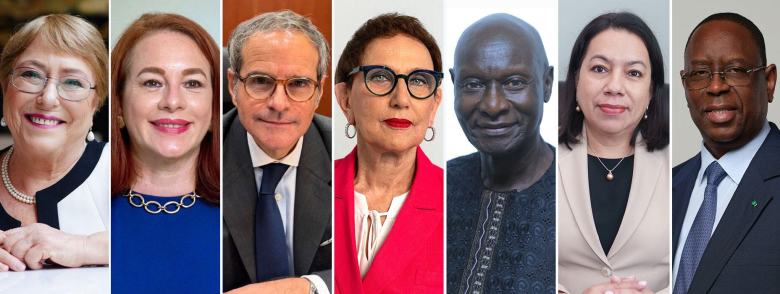
The concentration of Latin American and Caribbean candidates is both opening and obstacle. Four active candidates come from the region: Rafael Mariano Grossi of Argentina, María Fernanda Espinosa of Ecuador, Rebeca Grynspan of Costa Rica, and Carolyn Rodrigues Birkett of Guyana. Regional claims are strongest when regions agree. Four candidacies risk dividing support, fragmenting straw-ballot results, and creating rival national campaigns that refuse to yield until late in the process. Otunnu could present himself as a compromise whose support is broad rather than geographically concentrated.
Yet the same proliferation signals the region’s confidence that the office belongs there. If Latin America and the Caribbean consolidate behind one candidate, particularly a woman —she would carry two of the most powerful political arguments in the race at once. Otunnu would then be asking member states to set aside both informal regional rotation and the demand for a historic gender change.
That demand is no longer abstract. The United Nations has had eight secretaries-general, all men. All 193 member states, acting by consensus, have called for the nomination of women. The language does not bind the Security Council, and governments are capable of endorsing gender inclusion in principle while abandoning it in closed negotiation. Still, the symbolism is unavoidable. Choosing a ninth man would highlight the gap between the institution’s public commitments and its internal habits.
The field strengthens the argument. Espinosa has served as foreign minister, defense minister, permanent representative, and president of the General Assembly. Grynspan has led UNCTAD and held senior posts at UNDP. Rodrigues Birkett combines foreign-minister experience with recent Security Council service and a small-state perspective. Otunnu’s supporters can fairly note that gender should not automatically disqualify male candidates. Politically, however, the position is harder to sustain than intellectually. A process that again chooses a man will be judged not only by whether that man was qualified, but by why several qualified women were passed over.
Otunnu’s record on children in war — including girls affected by recruitment and sexual violence, gives him standing on protection and equality. He could commit to gender parity in senior appointments. He cannot, by taking office, embody the change that a female candidate would represent. This may be his most significant disadvantage.
Exile, sponsorship, and competing theories of leadership
Otunnu’s political life was also shaped by estrangement from Uganda. He served as foreign minister in the government overthrown by Yoweri Museveni’s forces in 1986, then went into exile and became a prominent critic of Museveni’s rule. For years he was denied a Ugandan passport and continued his international career with documentation from Côte d’Ivoire. The experience lent his public persona a particular moral gravity: he was not an advocate speaking abstractly about displacement or repression; he had lived it.
Exile also extracted a cost. In 1996, after the United States blocked Boutros-Ghali, Otunnu was regarded in diplomatic circles as a plausible African contender. Uganda did not nominate him. Personal and domestic political rivalry overrode the possibility that a Ugandan might lead the United Nations. The contrast with the present is striking. Uganda has now nominated him. A state that once refused to advance his name is asking the world to consider him for the highest office in international diplomacy. The reversal is restorative. It is also revealing. Even the most international of offices requires national sponsorship.
Placed beside the other candidates, Otunnu’s proposition becomes clearer. Grossi offers technical competence and current crisis management as director general of the International Atomic Energy Agency. Grynspan represents economic diplomacy at a moment when geopolitical instability is inseparable from inequality and financial vulnerability. Espinosa offers the broadest fusion of national and multilateral experience and the strongest claim as a historic first female secretary-general. Rodrigues Birkett brings recent Security Council experience, a small-state perspective, and an Indigenous background largely absent from the UN’s upper leadership. Sall offers presidential stature and the ability to speak to heads of state as a peer.
Otunnu represents a different diagnosis: that the United Nations has not chiefly failed for lack of management technique, but because it has lost moral confidence, political imagination, and the capacity to turn principle into durable consensus. That diagnosis may be correct. Member states may nevertheless prefer a candidate who promises efficiency over conscience, access over confrontation, and administrative repair over institutional revival.
Moral authority and the decision beneath the ceremony
Otunnu speaks of the secretary-general’s moral authority. The phrase can sound antiquated when states bomb cities, disregard courts, manipulate humanitarian access, and treat Security Council paralysis as a strategic asset. Yet moral authority is not irrelevant merely because it is weak. The office cannot compel obedience, but it can shape how violations are named, remembered, and politically understood. It can force governments to defend conduct they would prefer to normalize. It can preserve a language of accountability even when enforcement has collapsed.
His work on children and armed conflict succeeded because he translated outrage into institutional practice—building systems for naming perpetrators, documenting violations, and mobilizing pressure. The open question is whether that method can be scaled to an organization facing war among major powers, collapsing humanitarian finance, technological disruption, and a Security Council whose permanent members increasingly treat international norms as tools to apply selectively. A secretary-general who speaks morally but cannot negotiate will become irrelevant. One who negotiates without moral clarity may remain useful but cease to matter. Otunnu’s candidacy rests on the claim that he can avoid both failures.
To reach the office, Otunnu must accomplish several things at once. He must persuade the African Union to treat his candidacy as a continental interest, or at least prevent Africa from coalescing behind Sall. He must exploit the fragmentation of the Latin American and Caribbean field before that region settles on a single candidate. He must address the case for a woman without sounding dismissive of a change the UN has postponed for eighty years. He must show that ideas about moral authority are accompanied by credible plans for budgets, management, technology, and reform.
Above all, he must remain acceptable to all five permanent members of the Security Council. A candidate can be admired by most of the General Assembly and still be eliminated by one veto. The secretary-general is said to represent all member states, yet no one reaches the office without surviving the preferences of Washington, Beijing, Moscow, London, and Paris.
Otunnu understands this architecture because he helped refine one of the mechanisms through which it operates. The knowledge gives his campaign a certain irony: the man associated with the formula for revealing hidden opposition must now submit himself to it.
What the race reveals
Boutros-Ghali’s election reflected Africa’s demand to be represented. Annan’s reflected Africa’s determination to retain the office after a great power rejected its first choice. The present race is more fragmented. Africa can argue that no region is more central to the UN’s peacekeeping, humanitarian, development, and climate agendas. Latin America and the Caribbean can argue that they have waited since 1991. Supporters of female candidates can argue that a ninth consecutive man would make a mockery of the organization’s stated principles. Each claim is legitimate. None is decisive by itself.
Otunnu’s candidacy forces these claims into direct competition. He may be one of the people best prepared to understand the institution. He may also be the wrong gender from the wrong region at the wrong political moment. That tension is not incidental to his story. It is the story.
The United Nations says it wants a leader of independence, integrity, experience, and vision. Its members will choose through a process shaped by regional bargaining, gender expectations, domestic rivalries, and the veto interests of great powers. Olara Otunnu knows the difference between those two realities. Whether that knowledge qualifies him for the office or merely allows him to understand why he may not get it, may be the most revealing question of the race.
Recommended Posts


Adam is an accomplished professional with a unique interdisciplinary background: combining expertise in psychology, journalism, and restorative justice. He has a bachelor’s degree in community psychology from Makerere University Kampala, Uganda; a master’s degree in journalism from Northeastern University in the United States; and a master’s degree in restorative justice from Vermont Law & Graduate School in the United States. As a versatile communicator and advocate of social justice, Adam brings a unique perspective to his work. He is capable of fostering understanding, insight, clarity, and a commitment to meaningful change.
Email contact: adam@tranquilitynews.com


