
Tanzania, Uganda Revive $20 billion Tanga energy hub as East Africa’s oil race further intensifies
While officials presented the deal as the next phase of regional energy integration, it also sends a strong market signal.
FRIDAY August 7, 2026

By Adam Ihucha
The Tranquillity News Correspondent, Tanzania
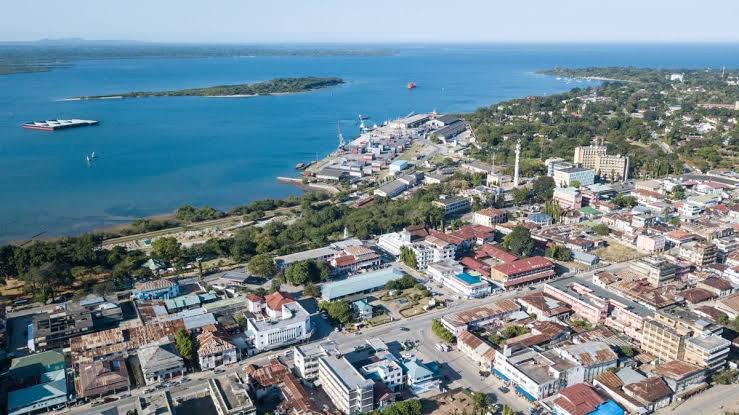
Tanzania and Uganda are reviving plans to turn the Indian Ocean port of Tanga into a regional refining and trading hub in a project expected to attract more than $20 billion of investment.
The latest move underscores their determination to capture more value from East Africa’s emerging oil industry after billionaire Aliko Dangote opted to pursue a refinery project in Kenya instead.
Presidents Samia Suluhu Hassan and Yoweri Museveni witnessed the signing of a Memorandum of Understanding in Dar es Salaam between the Tanzania Petroleum Development Corporation, the Uganda National Oil Company, and Vitol Bahrain E.C. to jointly develop petroleum refining, storage, logistics, trading, and distribution infrastructure around Tanga.
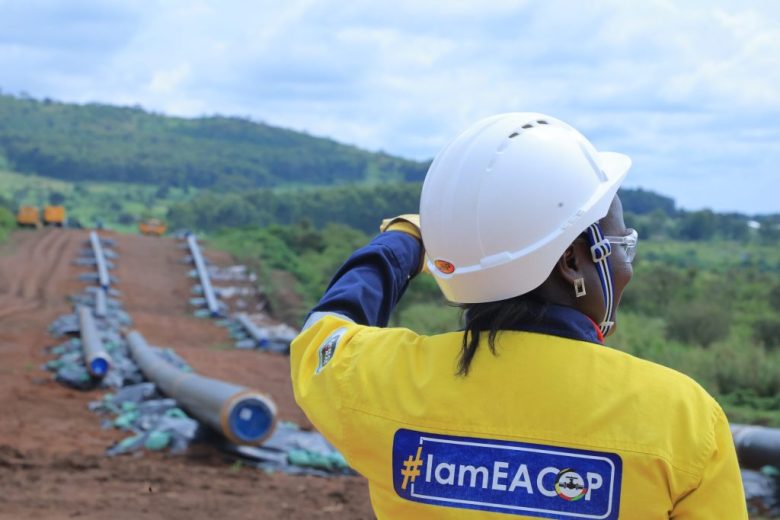
The agreement marks one of the region’s biggest downstream energy initiatives since construction began on the $5 billion East African Crude Oil Pipeline (EACOP), which will transport crude from Uganda’s Albertine Graben to Tanzania’s Indian Ocean coast.
While officials presented the deal as the next phase of regional energy integration, it also sends a strong market signal.
Only months ago, Africa’s richest person Aliko Dangote chose Kenya over Tanzania for a planned refinery investment, raising questions about the future of the long-discussed Tanga refinery.
The latest agreement suggests Dodoma and Kampala have instead decided to proceed by broadening the investor base and embedding the refinery within a much larger commercial energy platform.
Rather than competing for a single refinery investment, the two governments are betting that integrated infrastructure—including refining, petroleum storage, marine terminals, commodity trading, and logistics—will attract global capital looking for long-term exposure to East Africa’s energy transition.
Pipeline economics favour Tanga
The commercial rationale increasingly rests on geography.
Uganda’s crude is already committed to EACOP, the 1,443-kilometer heated pipeline designed to move as much as 246,000 barrels of waxy crude a day from Hoima to the Port of Tanga. Construction has passed 90 per cent completion, with first oil expected before the end of 2026.
That makes Tanga the natural endpoint for Uganda’s export system.
Industry analysts say locating large-scale refining capacity at the pipeline’s coastal terminus reduces transportation costs, eliminates additional crude handling, and allows investors to leverage infrastructure already financed through EACOP.
“The economics increasingly favour refining where the crude arrives,” said a regional energy analyst familiar with East African petroleum infrastructure. “Moving crude beyond Tanga for processing elsewhere adds cost while duplicating logistics that the pipeline is already designed to solve.”
That logic has become more compelling as billions of dollars have already been committed to infrastructure surrounding Tanga, including export terminals, storage facilities and associated port upgrades.
By contrast, transporting crude to another coastal refinery would require additional shipping or pipeline investment while reducing the operational efficiencies created by EACOP.
Beyond a refinery
The agreement goes well beyond refining.
It envisages an integrated regional energy hub combining petroleum storage, blending facilities, marine terminals, commodity trading, bunkering services, and fuel distribution across East and Central Africa.
The development would complement Uganda’s planned 60,000-barrel-per-day Hoima refinery rather than replace it, creating multiple downstream processing and distribution points for the region’s petroleum industry.
For Vitol, one of the world’s largest independent energy traders, the project expands an existing relationship with Uganda’s petroleum sector.
The company already has a seven-year agreement with UNOC backed by financing of as much as $2 billion for petroleum storage, pipelines, and logistics infrastructure.
Its participation introduces a global trading house with experience in connecting upstream production to international commodity markets, potentially strengthening the commercial viability of the wider hub.
The agreement also aligns with plans for a natural gas pipeline linking Tanzania and Uganda, studies for which are expected to conclude later this year, and a refined petroleum products pipeline connecting both countries.
Uganda has separately secured World Bank financing for a 400-kilovolt electricity transmission interconnector with Tanzania, extending integration beyond oil into regional power markets.
Taken together, the projects point to an increasingly interconnected East African energy corridor.

Tanzania’s commercial position
Unlike many transit states, Tanzania participates directly in EACOP’s ownership structure.
Through TPDC, the country holds a 15 per cent equity stake in the pipeline company, giving it exposure to operating revenues alongside transit fees generated by crude exports.
That equity position fundamentally changes Tanzania’s economic incentives.
Instead of functioning solely as a transport corridor, the country benefits from expanding commercial activity around the pipeline, including storage, refining, exports and fuel trading.
Approximately 1,147 kilometres of EACOP’s route runs through Tanzania, compared with about 296 kilometers in Uganda, making the country the principal host for the project’s infrastructure.
Construction has employed more than 10,000 Tanzanians and accelerated investment in roads, port facilities, and technical training around Tanga.
Competing energy corridors
The latest agreement also reflects growing competition among East African countries to become the region’s preferred energy gateway.
For decades, Kenya’s Port of Mombasa dominated petroleum imports and distribution across much of East Africa.
Moving crude beyond Tanga for processing elsewhere adds cost while duplicating logistics that the pipeline is already designed to solve,” energy analyst.
EACOP changes that equation by directing Uganda’s crude exports through Tanzania instead.
Analysts say the pipeline increasingly strengthens the investment case for concentrating downstream petroleum infrastructure around Tanga, where crude already arrives for export.
As additional storage, refining, and trading facilities are built, the city could evolve from an export terminal into the region’s principal petroleum marketplace.
That would position Tanga to serve not only Uganda and Tanzania but also Rwanda, Burundi, eastern Democratic Republic of Congo and South Sudan, markets where fuel demand continues expanding alongside urbanisation and industrialisation.
Geopolitics meets capital
The partnership comes as African governments seek to capture more value from natural resources amid pressure to industrialise before the global energy transition reduces long-term oil demand.
Rather than exporting crude with limited domestic processing, Tanzania and Uganda are attempting to anchor industrial development around refining, logistics, and commodity trading.
The strategy also diversifies revenue sources beyond upstream production by generating income from storage, transportation, marine services, and fuel marketing.
For investors, the appeal extends beyond refining economics alone.

Integrated energy hubs typically generate multiple revenue streams with different risk profiles, making them more resilient to fluctuations in refining margins or crude prices.
Whether the projected $20 billion ultimately materialises will depend on financing conditions, oil prices, and execution risks.
Large-scale refinery projects globally have faced rising construction costs, tighter environmental scrutiny, and increasingly selective capital markets.
Still, the agreement provides the clearest indication yet that Tanzania and Uganda intend to move beyond EACOP as a standalone export pipeline and build a broader downstream energy economy around it.
If successful, Tanga will become more than the endpoint for Uganda’s crude exports.
It will emerge as East Africa’s principal oil logistics, refining, and trading centre—a shift that can redraw regional energy flows and alter the competitive balance among ports along Africa’s eastern seaboard for decades.
Recommended Posts


Adam Ihucha is a prominent Tanzanian journalist and author recognized for his extensive coverage of tourism, wildlife conservation, and economic issues in East Africa. Based in Arusha, he serves as a senior correspondent for The Tranquility News and is a long-time contributor to eTurboNews (eTN), where he provides global insights into Tanzania's travel industry.
Throughout his career, Ihucha has written for several major publications, including The Guardian (Tanzania) and The EastAfrican. His work frequently highlights the intersection of environmental conservation and economic development, covering critical topics such as anti-poaching initiatives, national park management, and regional trade within the East African Community. His journalism is noted for its advocacy for sustainable tourism and its role in documenting the achievements of Tanzania's tourism sector.
Email contact: ihucha@tranquilitynews.com


