
August 7, 2025

By Adam Musa,
The Tranquility News Correspondent, North America
William Blackstone famously stated that it’s better for ten guilty men to escape than for one innocent man to suffer. Similarly, Nelson Mandela emphasized, “There can be no justice without a strong independent judiciary. The judiciary can do little without the support of a strong legal profession.”
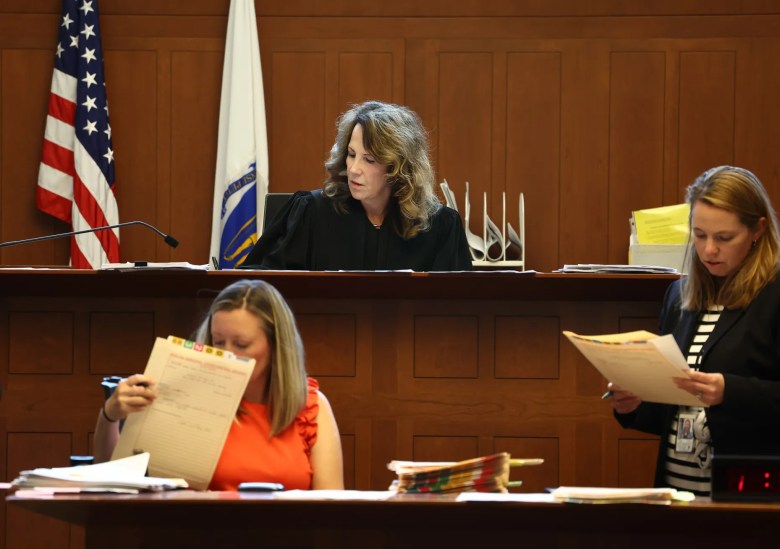
Boston — On July 22, 2025, Chief Judge Tracy-Lee Lyons of the Boston Municipal Court in Massachusetts dismissed over 100 criminal cases. The dismissals resulted from the state’s failure to provide legal representation to defendants for more than 45 days—an action that highlights a tension central to the basic ingredients of justice: the individual’s right to effective counsel versus the judiciary’s institutional responsibility to uphold constitutional rights, both locally and globally.
According to the Boston Globe, the hearing marked a significant turning point, shedding light on the consequences of a labor stoppage by bar advocates—private attorneys appointed to represent indigent defendants. The dismissed cases spanned charges from shoplifting and driving with a suspended license to domestic violence, assault with a deadly weapon, and drug trafficking.
At the core of this legal crisis lies the Sixth Amendment of the U.S. Constitution, which guarantees the right to legal representation. The well-known “Miranda warning,” stemming from the 1966 Miranda v. Arizona Supreme Court decision, was designed to ensure that individuals understand this fundamental right when suspected of a crime.
An Independent Judiciary: The Cornerstone of Democratic Societies
Scholars and legal theorists agree that the right to effective legal representation is viable only within the framework of an independent judiciary. Judicial independence is a foundational element of democratic governance, ensuring impartiality in adjudication, safeguarding individual liberties, and maintaining checks on executive and legislative overreach.
Ted Olson, former U.S. Solicitor General, reinforced this view, stating: “Our independent judiciary is the most respected branch of our government and the envy of the world.”
Globally, the United Nations, through the United Nations Office on Drugs and Crime (UNODC), tracks indicators relevant to unresolved legal cases. While comprehensive global statistics on all unresolved legal matters are unavailable due to varying definitions and reporting standards, Sustainable Development Goal (SDG) Indicator 16.3.2 offers a valuable proxy. It measures the proportion of unsentenced detainees within the overall prison population—highlighting delays in adjudication.

Historical and Legal Context of the Right to Counsel
David Carroll, Executive Director of the Sixth Amendment Center, notes that the right to counsel in the U.S. predates the nation’s founding. Rhode Island passed the first such statute in 1660, recognizing that accusations can stem from “envy or malice,” and that procedural fairness demands legal representation.
Carroll warns, however, that many Americans misunderstand the scope of their right to counsel. In Gideon v. Wainwright (1963), the U.S. Supreme Court affirmed the right but did not mandate specific funding levels or implementation standards for states. As Carroll explains, the Court’s reluctance stems from two main factors:
- Lack of a Universal Model: No single public defense model fits every jurisdiction. What works in New York City may fail in rural Nevada. The effectiveness of legal representation hinges on compliance with national standards—such as attorney qualifications, manageable workloads, early appointment of counsel, and adequate supervision—regardless of the model used.
- Legislative Control Over Budgets: Courts are limited in directing legislative funding decisions due to the separation of powers. Still, judicial remedies can influence public policy. In 2004, the Massachusetts Supreme Judicial Court addressed chronic underfunding of public defense by requiring the release of detainees who had not received legal representation within seven days of arrest and dismissing cases where representation was delayed beyond 45 days. This landmark decision prompted the legislature to increase funding—demonstrating the judiciary’s indirect yet powerful role in shaping policy.
Federal Oversight and the Path Forward
Carroll argues that the U.S. Congress should establish a national entity to set and enforce indigent defense standards. Given that the right to counsel is a constitutional guarantee, federal funding should be allocated to help states meet these standards. Ideally, such an agency would be housed within the Department of Justice or operate independently to oversee both state and federal public defender systems.
Carroll’s longstanding involvement in right-to-counsel policy positions him as a key thought leader in this space. He explains that the Sixth Amendment—like much of the Bill of Rights—was crafted to balance the scales of justice in criminal trials, ensuring procedural fairness when the full weight of the government bears down on a defendant.
Judicial interpretation of the Sixth Amendment has produced extensive case law on elements such as the right to a speedy trial, compulsory process, and the confrontation clause. But the right to counsel remains its most consequential provision. Without legal representation, a defendant cannot fully access the protections offered by the Constitution.
The Global Context: Delays, Overcrowding, and Systemic Challenges
According to UNODC data, the global prison population stood at approximately 11.5 million in 2022, with about 30% (3.5 million) categorized as unsentenced detainees. This trend has remained stable for over a decade, reflecting systemic delays in adjudication. Regional disparities are stark:
Unsentenced detainees as a proportion of overall prison population, 2015 and 2021 (percentage)

From 2015 to 2021, some regions saw notable changes. For instance, Oceania experienced a rise in unsentenced detainees, while Latin America and the Caribbean saw a decline. Additionally, in parts of Africa, Oceania, and the Americas, women are 5–8% more likely than men to be detained without sentencing.
Overcrowding compounds these challenges. Nearly half of reporting countries operated prisons over capacity in 2021, exacerbating human rights concerns and due process violations.
The Lavallee Protocol
In Massachusetts, the judiciary has taken proactive steps to uphold constitutional rights. The Lavallee protocol mandates the release of detained defendants unrepresented for more than seven days and dismisses cases if representation is not provided within 45 days. This judicial safeguard is currently in effect in Suffolk and Middlesex counties, with potential expansion to Essex County and juvenile courts.

Justice Neil Gorsuch summarized the enduring value of judicial independence
“What happens when the lights are on you, when you are in the dark? If the government turns its attention to you, do you want a judge who is responsive to the politics of the day—or one who applies the law and the Constitution to the facts of your case without regard to public opinion/politics?”
This is not merely a philosophical concern. It is a practical question of liberty. As history shows, a judiciary beholden to political will—or underfunded to the point of paralysis—cannot protect the rights it is sworn to uphold.
The Boston Municipal Court’s actions in July 2025 underscore the indispensable role of an independent judiciary in ensuring justice, particularly for society’s most vulnerable. Without adequate legal representation, constitutional guarantees become hollow promises. As both domestic precedent and global data demonstrate, safeguarding the right to counsel requires a coordinated effort—legislative, judicial, and the executive.
Ultimately, justice demands more than rhetoric. It demands structure, accountability, and a legal system that puts fairness above expediency.
Recommended Posts


Adam is an accomplished professional with a unique interdisciplinary background: combining expertise in psychology, journalism, and restorative justice. He has a bachelor’s degree in community psychology from Makerere University Kampala, Uganda; a master’s degree in journalism from Northeastern University in the United States; and a master’s degree in restorative justice from Vermont Law & Graduate School in the United States. As a versatile communicator and advocate of social justice, Adam brings a unique perspective to his work. He is capable of fostering understanding, insight, clarity, and a commitment to meaningful change.
Email contact: adam@tranquilitynews.com


