
July 23, 2026
By Elvis Kintu Nsonyi
New York City
Another road crash, another national outcry, another round of promises—and, predictably, another knee-jerk government directive.
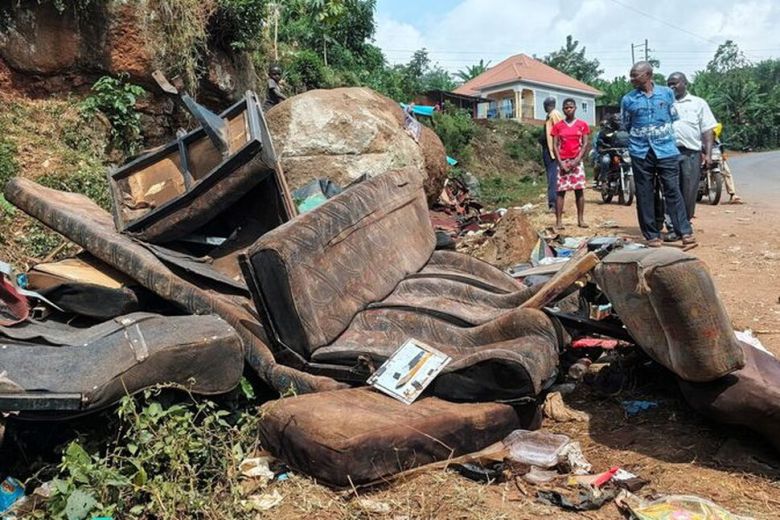
A few weeks ago, Uganda was shaken by a series of school bus crashes. The most heartbreaking involved pupils from King David Junior School in Ndejje. The nation mourned and families grieved. Yet, as has become routine, the immediate response was to suspend school tours.
The issue is not whether school tours should be reviewed. The real question is why meaningful road safety reforms only emerge after lives have already been lost.
Uganda’s approach to road safety has become a familiar script: tragedy first, policy later. This is not governance. It is crisis management disguised as leadership.
Road crashes are not “accidents” in the traditional sense. Increasingly, global experts describe them as preventable incidents because most result from identifiable failures —speeding, poorly trained drivers, unroadworthy vehicles, weak enforcement, and inadequate infrastructure.
According to the World Health Organization (WHO), approximately 1.19 million people die on the world’s roads each year, while between 20 and 50 million suffer non-fatal injuries, many resulting in lifelong disabilities. Road traffic injuries remain the leading cause of death among children and young adults aged 5 to 29.
It is alarming that more than 90% of these deaths occur in low- and middle-income countries, even though these countries own only about 60% of the world’s vehicles.
Uganda is no exception. Every year, thousands of Ugandans lose their lives on our roads, and countless families are pushed into poverty by deaths, disabilities, medical bills, and lost incomes. Beyond the human toll lies a significant economic burden.
Globally, road crashes cost countries about 3% of their Gross Domestic Product (GDP) annually. For developing economies already grappling with unemployment, healthcare challenges, and infrastructure deficits, this is a price we simply cannot afford.
In 2022, I attended the United Nations High-Level Meeting on Road Safety in New York alongside Kampala Lord Mayor Erias Lukwago. The meeting focused on “The 2030 Horizon for Road Safety: Securing a Decade of Action and Delivery.”
There, the international community reaffirmed its commitment to the Second Decade of Action for Road Safety (2021–2030), which aims to reduce global road traffic deaths and injuries by 50% by 2030, in line with the Sustainable Development Goals.
The roadmap exists. The science exists. The evidence exists. What is missing is sustained political will.
Instead of reacting after every tragedy, governments must institutionalize risk reduction and proactive road safety planning. Risk management should not sit idle in well-written policy documents that gather dust on shelves. A policy that only comes alive after a funeral procession has already failed.
Consider the United States. Although thousands of people die on its roads each year, the country maintains structured driver-licensing systems through state Departments of Motor Vehicles (DMVs). Prospective drivers must typically pass a written examination, a practical road test, and a vision screening. Many fail on their first attempt, then study, improve, and try again — because driving is treated as a privilege rather than an entitlement.
In many jurisdictions, periodic vehicle inspections are mandatory, helping to remove unsafe vehicles from public roads.
The lesson is simple: a driver’s license should reflect demonstrated competence, not merely possession of a laminated card.
This raises uncomfortable but necessary questions. How rigorous is Uganda’s driver training system? How credible are our licensing procedures? How often are commercial vehicles independently inspected for roadworthiness? How many dangerous vehicles remain on the road because enforcement is weak or avoidable?
These questions must be answered long before another school bus overturns.
Road safety cannot be left solely to the police or the Ministry of Works and Transport. It requires coordinated action across sectors—education, health, urban planning, engineering, insurance, local government, civil society, and citizens.
This is the essence of the Safe System Approach, now embraced globally: designing roads, vehicles, laws, and institutions with the understanding that human error is inevitable, but death and serious injury are not.
Uganda must stop confusing announcements with solutions. Suspending school trips may generate headlines, but it does not make roads safer. Launching investigations may satisfy the evening news, but it does not fix defective brakes. Emotional statements may offer temporary comfort, but they do not improve driver competence.
If press conferences prevented crashes, Uganda would already have the safest roads in Africa.
The true measure of leadership is not how loudly officials respond after tragedy, but how effectively they prevent it.
The world already knows what needs to be done. The United Nations has laid out the framework, and global best practices are well established. Uganda’s challenge is no longer a lack of knowledge, but a failure of implementation. Whether the country meets its target of halving road deaths by 2030 will depend on the current regime’s political will. Every delayed reform leaves another family at risk of receiving the worst phone call of their lives.
The next road tragedy must not become another trigger for temporary directives. It should mark the moment Uganda abandons its culture of reaction and embraces a permanent culture of prevention.


