
Botswana pins hopes on ‘golden passport’ plan as diamond slump strains finances
MONDAY January 12, 2026
By Adam Ihucha, Tranquillity News Correspondent , Botswana
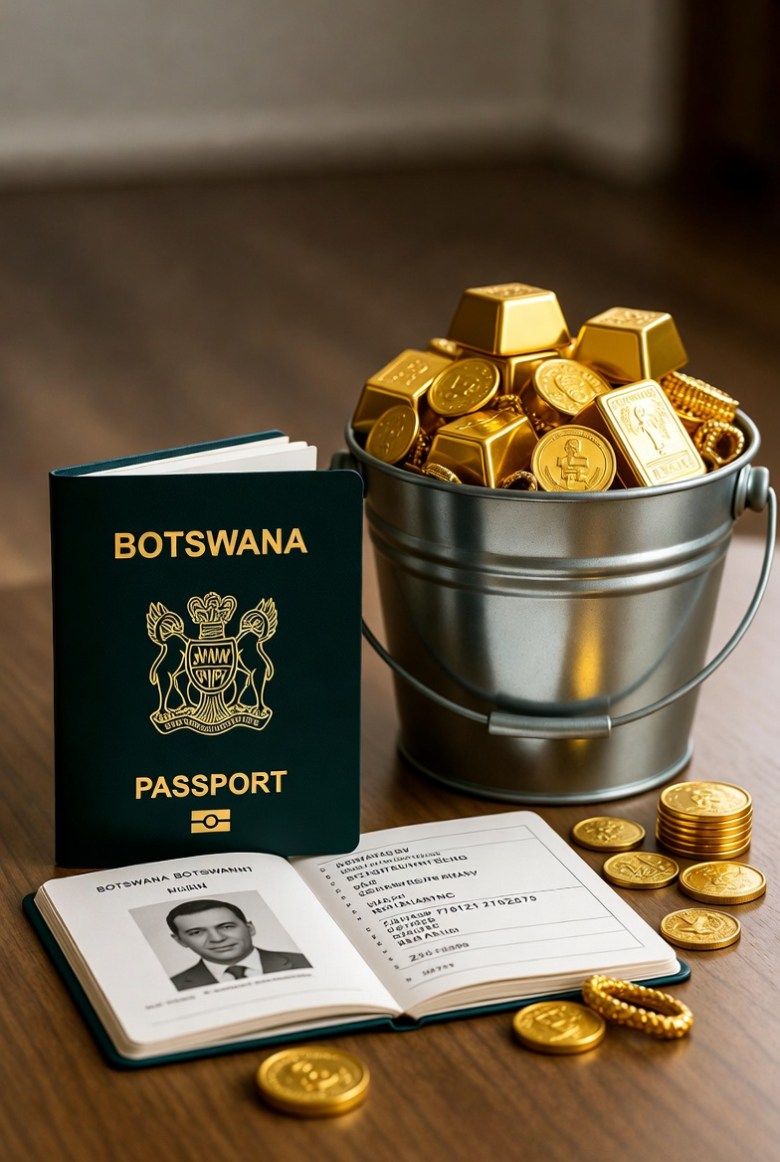
Botswana is making a major foray on a “golden passport” scheme to shore up public finances hit by a sharp slowdown in diamond sales, raising questions about how effective citizenship-for-cash programmes can be for countries with limited global mobility appeal.
Under the proposal, foreign nationals would be able to obtain Botswana citizenship in exchange for a one-off investment of up to about $100,000.
If approved by parliament, Botswana would join a growing list of countries offering passports or residency in return for money, including St Lucia, Malta and Grenada.
In the United States, President Donald Trump has said he plans to introduce a $5 million “gold card” offering residency.
The scheme comes at a difficult moment for Botswana, long held up as an African success story for its prudent management of diamond wealth.
Diamonds account for about a third of gross domestic product and almost all foreign export earnings, but a slump in global demand for natural stones has forced the government to look for new revenue streams.
The International Monetary Fund expects the downturn to push Botswana’s economy into a 1 percent contraction in 2025, a rare reversal for a country that has risen from one of the world’s poorest at independence to one of Africa’s richest.
Legislation underpinning the government-backed golden passport plan is expected to be debated in parliament, with a vote likely in early 2026.
Armand Arton, chief executive of Arton Capital, a financial advisory firm marketing the scheme, said around 1,000 people had already registered interest, mainly from the United States, Zimbabwe and India.
The aim, he said, was to attract up to 5,000 families and raise about $500 million over five years.
“People are attracted by the political stability of Botswana, the opportunities and the rule of law,” Arton said, adding that interest from G7 countries had been higher than expected.
The firm had initially anticipated stronger demand from China and the Arab world, he said.
Industry experts, however, are sceptical that Botswana can draw large numbers of wealthy applicants.
“I don’t think this will be popular,” said Collins Bogatsu, an immigration consultant based in Gaborone.
He said the government had yet to issue clear guidelines on how applications would be processed.
“This thing is all about politics, so politicians might have their own people they want to attract.”
Botswana’s presidency did not respond to a request for comment.
Another professional in the citizenship-by-investment industry said Botswana would rank “the lowest of the pile yet” among countries selling passports, citing limited travel benefits.
According to Arton Capital’s Passport Index, Botswana citizens enjoy visa-free access to 51 countries, largely in southern Africa and the Caribbean, compared with 137 for Singapore, including the European Union.
Critics of such schemes argue that they rarely deliver broad-based economic benefits.
Sarah Kunz, a lecturer in migration studies at the University of Essex, has previously said governments often use the proceeds to cover “running costs” rather than productive investment.
Arton said his firm did not know how Botswana’s government intended to deploy the funds, but said low-income housing and support for entrepreneurship were priorities for President Duma Boko’s administration.
Boko swept to power in 2024, ending nearly six decades of rule by the same party since independence in 1966, on populist promises including the creation of 500,000 jobs in five years.
Those ambitions have been tested by strained relations with De Beers, the world’s largest diamond company.
The government owns 15 percent of De Beers and supplies about 70 percent of its rough diamonds, but negotiations over a proposed increase in Botswana’s stake have dragged on.
In July, Boko said the country was “broke” because De Beers was “not doing its job”.
The diamond slump has already had tangible effects.
Botswana’s health ministry has delayed non-urgent medical operations, while the government — the country’s largest employer — has frozen new hiring and public procurement.
Citizenship-by-investment programmes have also come under increasing international scrutiny.
In May 2025, the European Court of Justice struck down Malta’s scheme, ruling that selling citizenship amounted to turning nationality into “a mere commercial transaction”.
Arton said his firm had warned Botswana that state vetting alone would be insufficient to prevent abuse, and had recommended bringing in two UK-based due diligence companies to conduct background checks.
“With those additional checks, the chances of a sanctioned individual or someone with a criminal record getting through would be impossible,” he said.
Whether that reassurance will be enough to convince lawmakers — and potential investors — remains uncertain, as Botswana weighs the reputational risks against the urgent need to plug holes left by weakening diamond revenues.
Recommended Posts


Adam Ihucha is a prominent Tanzanian journalist and author recognized for his extensive coverage of tourism, wildlife conservation, and economic issues in East Africa. Based in Arusha, he serves as a senior correspondent for The Tranquility News and is a long-time contributor to eTurboNews (eTN), where he provides global insights into Tanzania's travel industry.
Throughout his career, Ihucha has written for several major publications, including The Guardian (Tanzania) and The EastAfrican. His work frequently highlights the intersection of environmental conservation and economic development, covering critical topics such as anti-poaching initiatives, national park management, and regional trade within the East African Community. His journalism is noted for its advocacy for sustainable tourism and its role in documenting the achievements of Tanzania's tourism sector.
Email contact: ihucha@tranquilitynews.com


