
Freedom was never just an announcement
From Juneteenth to World Refugee Day, the measure of freedom is not whether it is proclaimed, but whether it is made real for those still waiting on safety, dignity, and belonging
June 23, 2026
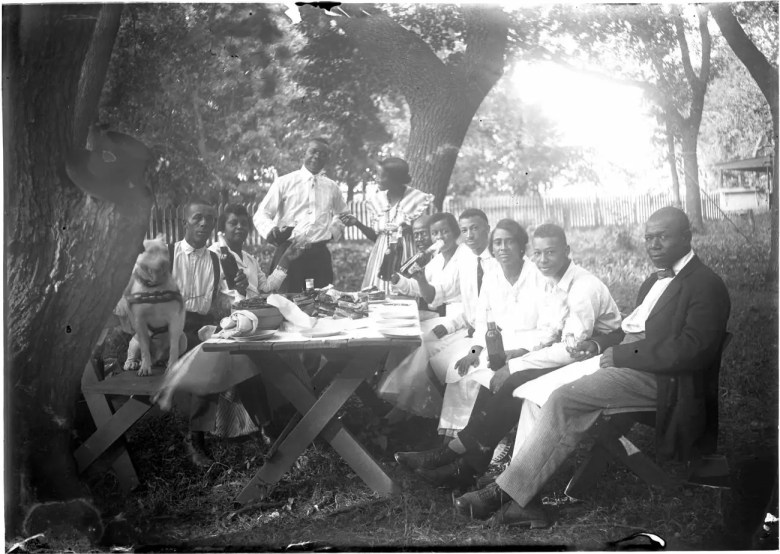
Collection of the Smithsonian National Museum of African American History and Culture, Gift of Brigitte Freed in memory of Leonard Freed, © Leonard Freed/Magnum.
By Adam Musa
The Tranquility News Correspondent, North America
Boston, Massachusetts
The news arrived late.
On June 19, 1865, Union troops reached Galveston, Texas, and informed more than 250,000 enslaved people that they were free. The Emancipation Proclamation had been issued more than two years earlier. The Civil War was nearly over. The law had already changed. Life had not.
That delay is the central fact of Juneteenth. It is also its warning.
Americans have long preferred emancipation stories with clean endings: a proclamation signed, a war won, a holiday declared. But freedom has rarely arrived as a single event. It has come unevenly, been enforced selectively, and depended on those most denied it to become its most disciplined builders. Juneteenth commemorates liberation, but its deeper meaning lies in what came after: the long, contested work of making freedom visible in ordinary life.
For the formerly enslaved, freedom meant more than release from bondage. It meant the right to read a contract, search for a stolen child, earn wages, worship openly, move without permission, vote, learn, teach, gather, and remember. It meant building the institutions that slavery had tried to make impossible.
Among the first of those institutions were schools.
For nearly 4 million newly freed African Americans, literacy was not an ornament. It was protection. To read was to guard against fraud, understand labor agreements, communicate across distances slavery had created, and claim civic standing in a nation that had never intended Black people to possess it.
Between 1861 and 1900, more than 90 institutions of higher education were founded for Black Americans, many of whom remained barred by law and custom from predominantly white colleges. These schools, including what became historically Black colleges and universities, were not merely educational projects. They were democratic infrastructure. They trained teachers, ministers, artisans, organizers, professionals, and citizens. They preserved archives of Black life in a country that often-preferred Black history sentimentalized, simplified, or erased.
Yet even this story resists innocence.
From the beginning, Black education was a battlefield over the meaning of Black freedom. Black communities saw schooling as a route to self-determination. Some white philanthropists saw it as a tool for stabilizing the racial order. Industrial training attracted funding not only because it offered Black students’ practical skills, but because it reassured white patrons that Black advancement could be contained within agriculture, mechanics, domestic work, and other forms of labor that did not threaten the hierarchy.
The debate between Booker T. Washington and W.E.B. Du Bois is often reduced to a clash of temperament: Washington the accommodationist, Du Bois the intellectual insurgent. The truth is more complicated. Washington, born into slavery and living under the shadow of Southern racial terror, understood the danger that could accompany Black ambition. His emphasis on trades and industrial education was not merely ideology; it was strategy under siege. Du Bois, born free in Massachusetts, demanded a broader horizon: Black participation in the arts, sciences, professions, and intellectual life of the nation.
Their disagreement was not about whether education mattered. It was about how much freedom America would permit Black education to imagine.
That question remains unsettled because Juneteenth is not only a commemoration of emancipation. It is a struggle over memory.
Long before Congress made Juneteenth a federal holiday in 2021, Black families and communities kept it alive through prayer, storytelling, music, parades, cookouts, and ritual. The holiday survived because people remembered it into public life. Red foods and drinks became part of that memory, carrying associations of sacrifice, transition, power, resilience, and joy rooted in African cultural traditions. The table became an archive. Celebration became testimony.
But memory is not automatically liberating. It can be disciplined, commodified, distorted, or turned into spectacle. A nation can add a holiday to the calendar while draining the history that gives it force. It can praise resilience while avoiding the systems that made resilience necessary.
That danger animated a United Nations discussion held on Juneteenth, where artists, historians, and cultural workers examined how art can resist hatred—and how it can also help produce it. The event linked the transatlantic trade in enslaved Africans, the Holocaust, the 1994 genocide against the Tutsi in Rwanda, and the 1995 genocide in Srebrenica. Its premise was stark: culture is never neutral.
Museums can restore names and agency to the enslaved, as Valika Smeulders of the Rijksmuseum argued in describing exhibitions on Dutch colonial slavery. Music can preserve witness, as Israeli clarinetist Nur Ben Shalom suggested in speaking of Holocaust melodies as forms of remembrance and resistance. Public memorial art can turn private grief into collective obligation, as Bosnian American artist Aida Šehović has done through installations honoring victims of Srebrenica.
But culture can also teach people whom to despise. Rwandan actor and playwright Diogène “Atome” Ntarindwa recalled how radio broadcasts in Rwanda used jokes, music, and entertainment to normalize the dehumanization that preceded genocide. Hatred does not always announce itself in manifestos. Sometimes it arrives as humor, rumor, rhythm, repetition. Sometimes atrocity is rehearsed first as culture.
This is why Juneteenth matters beyond the United States. It asks how societies remember the people they have harmed, and how easily public narratives can make some lives appear less grievable, less legitimate, less entitled to protection.
That question is especially urgent as the world marks World Refugee Day on June 20.

Observed one day after Juneteenth, World Refugee Day confronts another unfinished freedom: the right to seek safety, rebuild a life, and belong somewhere after violence, persecution, or conflict has made home impossible. This year’s campaign, “Until Everyone is Safe,” challenges stereotypes about refugees and calls for renewed solidarity with displaced people and the communities that receive them.
The scale of displacement is staggering. Nearly 42 million people worldwide have fled their home countries because of conflict, violence, or persecution. The United Nations has called for stronger international support, not only through emergency relief but through long-term access to jobs, education, health care, and social services. UNHCR’s goal to halve the number of refugees trapped in protracted displacement by 2035 reflects a truth Juneteenth also teaches: freedom cannot remain a promise on paper. It must become livable.
UNHCR High Commissioner Barham Salih, himself a former refugee from Iraq, has emphasized that being a refugee should be a temporary condition, not a lifelong fate. The distinction is crucial. Displacement may begin with flight, but injustice deepens when waiting becomes permanent: waiting for documents, waiting for asylum hearings, waiting for permission to work, waiting for children to enter school, waiting for the world to decide whose suffering warrants urgency.
The 1951 Refugee Convention, nearing its 75th anniversary, enshrines the right to seek safety. But rights, like proclamations, do not enforce themselves. They require institutions, political will, public memory, and a culture strong enough to resist dehumanization.
That challenge now confronts South Africa, where migration has become one of the country’s most volatile tests of belonging. The country hosts millions of immigrants, many from neighboring nations such as Zimbabwe, Mozambique, and Malawi. Some arrive legally and overstay. Others seek asylum. Many are drawn by South Africa’s relative economic power and pushed by poverty, instability, or limited opportunity at home.
The politics around them has hardened. High unemployment strained public services, and anger over crime have fed anti-migrant sentiment. In Durban, thousands of Malawians gathered near a community hall after arriving for voluntary repatriation. Delays turned into protest. Police fired rubber bullets and stun grenades. Authorities moved toward formal deportation proceedings.
The images were local. The story was global: migrants trapped in administrative limbo, governments promising order, and citizens encouraged to see outsiders as the source of problems created by deeper failures.
South Africa’s immigration policy is shifting toward a more enforcement-heavy and economically selective model: stronger border management, biometric systems, electronic travel authorization, immigration courts, penalties for employers, and new pathways for skilled workers. The government describes these reforms as necessary responses to irregular migration, corruption, and public pressure. These are real governance problems. States have obligations to manage borders, protect rights, and maintain public trust.
But enforcement cannot substitute for a politics of dignity.
When migrants become symbols of disorder, they can be blamed for unemployment they did not create inequality they did not design, and institutions they did not weaken. A society can treat their labor as useful and their presence as disposable. It can welcome skill while criminalizing desperation.
Juneteenth does not make South Africa’s migration crisis equivalent to American slavery. Nor does World Refugee Day collapse all forms of displacement into one history. Analogies can illuminate, but they can also flatten. The point is not sameness. It is recurrence.
Across time and borders, freedom is often rationed through status: enslaved or free, citizen or foreigner, documented or undocumented, skilled or unskilled, wanted or removable. The categories change. The moral danger remains.
The United States knows this logic well.
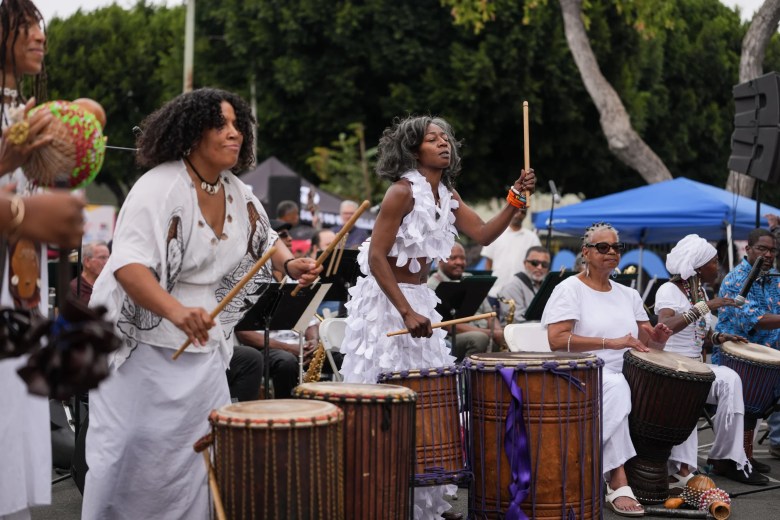
Migration from sub-Saharan Africa has grown sharply since the late 20th century, reshaping the American Black diaspora. Immigrants from Nigeria, Ethiopia, Ghana, Kenya, South Africa, and other countries have entered through family ties, education, employment, humanitarian protection, and the Diversity Visa program. Many are highly educated, active in the labor force, and likely to naturalize. They are part of the country’s classrooms, hospitals, churches, universities, businesses, and civic institutions.
They are also vulnerable to the machinery of immigration politics: travel bans, visa restrictions, asylum backlogs, refugee caps, temporary protections that can vanish, and public narratives that cast Black migrants as threats before they are seen as neighbors.
Juneteenth begins in Galveston. It must remain rooted in the specific history of enslaved African Americans and their descendants. But it also opens onto a wider moral geography. It asks what freedom means in a world where Black movement has so often been coerced, surveilled, exploited, or restricted: the forced movement of the slave ship, the constrained movement of segregation, the precarious movement of migrants, and the bureaucratic waiting room of asylum and deportation.
World Refugee Day sharpens that question. It reminds us that the right to be safe is inseparable from the right to be seen fully — not as a burden, threat, statistic, or temporary inconvenience, but as a person whose life has been interrupted and whose future remains possible.
The genius of Juneteenth is that it refuses the comfort of a completed story. The enslaved people of Texas were not freed by the mere existence of a proclamation. They were freed only when power was forced to arrive, announce itself, and be made real. Even then, freedom required schools, land, labor, law, memory, and collective defense.
A federal holiday can recognize that history. It cannot complete it.
That is the danger of celebrating Juneteenth as a national achievement rather than a national summons. The holiday is not a certificate of moral arrival. It is an annual audit of the distance between American language and American life.
Who is still waiting for rights already promised? Who is told that their history is too divisive to teach? Who is praised for labor but denied belonging? Who is remembered only when memory is convenient? Who is asked to celebrate freedom in a society still debating the terms of their humanity? Who, on World Refugee Day, is still waiting for safety to become more than a slogan?
The news reached Galveston late.
In many places, it still has not fully arrived.
Recommended Posts


Adam is an accomplished professional with a unique interdisciplinary background: combining expertise in psychology, journalism, and restorative justice. He has a bachelor’s degree in community psychology from Makerere University Kampala, Uganda; a master’s degree in journalism from Northeastern University in the United States; and a master’s degree in restorative justice from Vermont Law & Graduate School in the United States. As a versatile communicator and advocate of social justice, Adam brings a unique perspective to his work. He is capable of fostering understanding, insight, clarity, and a commitment to meaningful change.
Email contact: adam@tranquilitynews.com


