
Farmers demand access to climate finance as bloc shapes new 10-year strategy
The strategy intends to guide regional investment in climate resilience, adaptation, and sustainable economic development.
WEDNESDAY September 23, 2026

By Adam Ihucha
The Tranquillity News Correspondent, Tanzania
East African farmers are pressing governments to unlock billions of dollars in climate finance for agriculture, warning that the region’s new climate strategy will have limited impact unless funding moves beyond international institutions and reaches the farms, cooperatives, and rural businesses facing climate risks.
The demand comes as the East African Community (EAC) prepares its Climate Change Strategy and Action Plan 2026–2036, a 10-year framework intended to guide regional investment in climate resilience, adaptation, and sustainable economic development.
The financial stakes are substantial. The EAC says climate-related losses in East Africa could reach between 2 per cent and 4 per cent of regional GDP annually by 2040.
At the continental level, Africa faces an estimated adaptation and resilience financing requirement of about US$70 billion a year by 2030, while current flows remain far below that level.
Agriculture sits at the centre of the financing challenge because much of East Africa’s farming remains dependent on rainfall, leaving producers exposed to drought, floods, and increasingly unpredictable weather patterns.
The EAC itself identifies rain-fed agriculture as highly vulnerable to climate variability and climate change.
At the EAC Farmers’ Regional Dialogue on Climate Change 2026, more than 300 farmer leaders, civil society representatives, government officials, researchers, academics, regional institutions, and development partners called for the proposed strategy to establish practical mechanisms through which climate finance can reach farmers and rural enterprises.
The virtual dialogue was convened by the Eastern and Southern Africa Smallholder Farmers’ Forum (ESAFF).
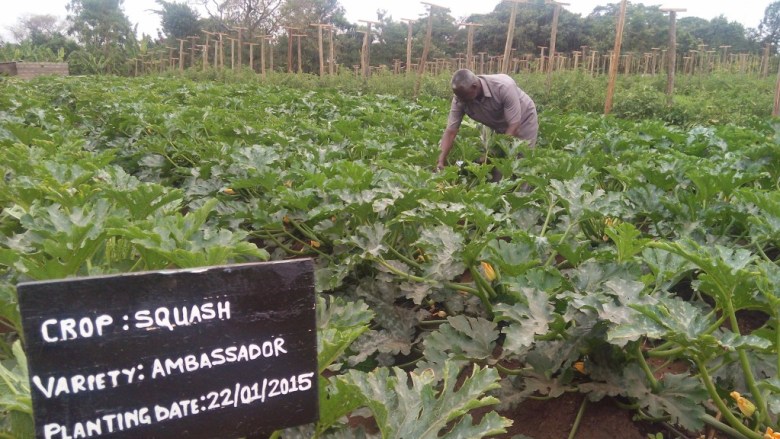
A senior official from Uganda’s Department of Climate Change and Carbon Trade Anastasia Namululi said the region needed to develop pipelines of bankable projects and dedicated financing windows to connect climate investment with communities.
She said climate funds should reach local governments, cooperatives, women, and youth — a proposal echoed by participants seeking to make climate finance more accessible to organisations already operating in rural economies.
The debate comes as new financing initiatives begin testing ways of bringing private and concessional capital closer to East African farmers.
Earlier this month, the International Fund for Agricultural Development and Equity Group launched a US$200 million, 12-year Africa Rural Climate Adaptation Finance Mechanism aimed at reaching 260,000 smallholder producers and 500 rural enterprises in Kenya, Uganda, Tanzania, and Rwanda.
The facility is designed to finance investments that help rural businesses and farmers to adapt to drought, erratic rainfall, and rising temperatures.
For farmers’ organisations, however, the challenge is not simply raising more money. It is changing how climate finance is structured and delivered.
Faith Ngige of the Pan African Climate Justice Alliance said there remained a significant gap between international climate-finance commitments and resources reaching farmers.
She called for financing models that can operate through farmer organisations, cooperatives, savings and credit cooperative societies, and other local institutions.

The financing problem extends beyond climate funds.
Agriculture across Africa receives a disproportionately small share of commercial lending, with one recent estimate putting the continent’s annual agricultural financing gap at between US$75 billion and US$200 billion.
Globally, the financing gap for small-scale agrifood systems is also substantial.
FAO estimates that climate finance reaching small-scale agrifood systems stood at only US$5.53 billion in 2019/20, representing just 0.8 per cent of tracked climate finance across all sectors.
The farmers argue that the EAC’s new strategy should, therefore, treat climate finance as an investment and delivery issue, not simply a policy commitment.
Presenting the farmers’ and civil society organisations’ position on the proposed strategy, Hakim Baliraine welcomed the framework’s emphasis on agroecology, sustainable land management, climate-resilient agriculture, climate finance, early-warning systems, indigenous knowledge, and the participation of women and youth.
But he said smallholder farmers should not be viewed merely as beneficiaries of climate programmes.
He called for farmers to be recognised as rights and knowledge holders, innovators, and active partners in climate decision-making and implementation.

The farmers and CSOs are calling for the strategy to align with regional and continental agricultural frameworks, including the CAADP Kampala Declaration and the EAC Regional Agri-food Systems Investment Plan.
The EAC Council of Ministers adopted the Regional Agri-Food Systems Investment Plan 2026–2035 in July, with priorities including agricultural infrastructure, climate resilience, digital technologies, agricultural financing, and cross-border trade.
Baliraine said the climate strategy should put agroecology and locally led adaptation at the centre of agricultural resilience while establishing financing channels capable of reaching farmers and communities.
The position also calls for stronger domestic financing for adaptation and Loss and Damage, greater investment in early-warning and preparedness systems, and climate information translated into practical services that farmers can use.
Farmers and civil society groups are also seeking stronger safeguards for land and community rights in carbon markets and nature-based solutions, support for farmer-managed seed systems, responsible digital technologies and artificial intelligence, and farmer-led mechanisms for tracking climate budgets and implementation.
They have proposed an Annual EAC Farmers’ Climate Dialogue to make farmer participation a permanent feature of the regional climate-policy process.
Presenting the proposed EAC strategy, Dismas Mwikila of the EAC Secretariat outlined lessons from the previous climate strategy, priorities under the new framework, opportunities for farmers, and the process towards finalisation.
Responding to the farmers’ recommendations, Mwikila said their proposals would be taken into the formal drafting process.

“The recommendations have been captured and will be submitted to the technical consultants and the drafting team for consideration and incorporation of the farmers’ inputs and recommendations into the Strategy,” Mwikila said.
The meeting included government representatives responsible for climate change and environment from all eight EAC partner states, giving farmers and civil society organisations an opportunity for engaging directly with policymakers.
The proposed strategy is being developed against a broader push by the EAC to make climate resilience part of regional economic planning.
The community has identified climate finance, resource mobilisation, and joint implementation mechanisms among its priorities for regional climate action.
The next major step will be the East Africa Regional Validation Meeting scheduled for Machakos, Kenya, end of September, where the draft strategy is expected to move closer to finalisation.
For farmers, the test of the new 10-year framework will ultimately be measured not by the size of climate commitments announced at regional and international fora, but by whether capital can be converted into irrigation, resilient seeds, early-warning systems, climate-smart technologies, insurance, and other investments that protect agricultural production at farm level.
Adam Ihucha is a prominent Tanzanian journalist and author recognized for his extensive coverage of tourism, wildlife conservation, and economic issues in East Africa. Based in Arusha, he serves as a senior correspondent for The Tranquility News and is a long-time contributor to eTurboNews (eTN), where he provides global insights into Tanzania's travel industry.
Throughout his career, Ihucha has written for several major publications, including The Guardian (Tanzania) and The EastAfrican. His work frequently highlights the intersection of environmental conservation and economic development, covering critical topics such as anti-poaching initiatives, national park management, and regional trade within the East African Community. His journalism is noted for its advocacy for sustainable tourism and its role in documenting the achievements of Tanzania's tourism sector.
Email contact: ihucha@tranquilitynews.com

