
September 12, 2025

Threats to international peace and security caused by terrorist acts
Fifth report of the Secretary-General on the threat posed by ISIL (DaÕesh) to international peace and security and the range of United Nations efforts in support of Member States in countering the threat (S/2017/467)
By Adam Musa,
The Tranquility News Correspondent, North America
New York — On a winter night in 2010, Portland’s Pioneer Courthouse Square glowed with Christmas lights. Families crowded in; carols rose in the cold air. A young man walked among them with a backpack.
He thought he was carrying a bomb. He thought he was about to strike terror into a city.
What he didn’t know: the bomb was fake, built by FBI agents. The only explosions came later — in a courtroom, in headlines, and in years of argument over whether the government had stopped a terrorist or invented one.
That Portland sting wasn’t unique. It foreshadowed a new era in which terrorism has grown harder to see, harder to stop, and sometimes manufactured by the very institutions meant to fight it.
The Age of the Lone Wolf
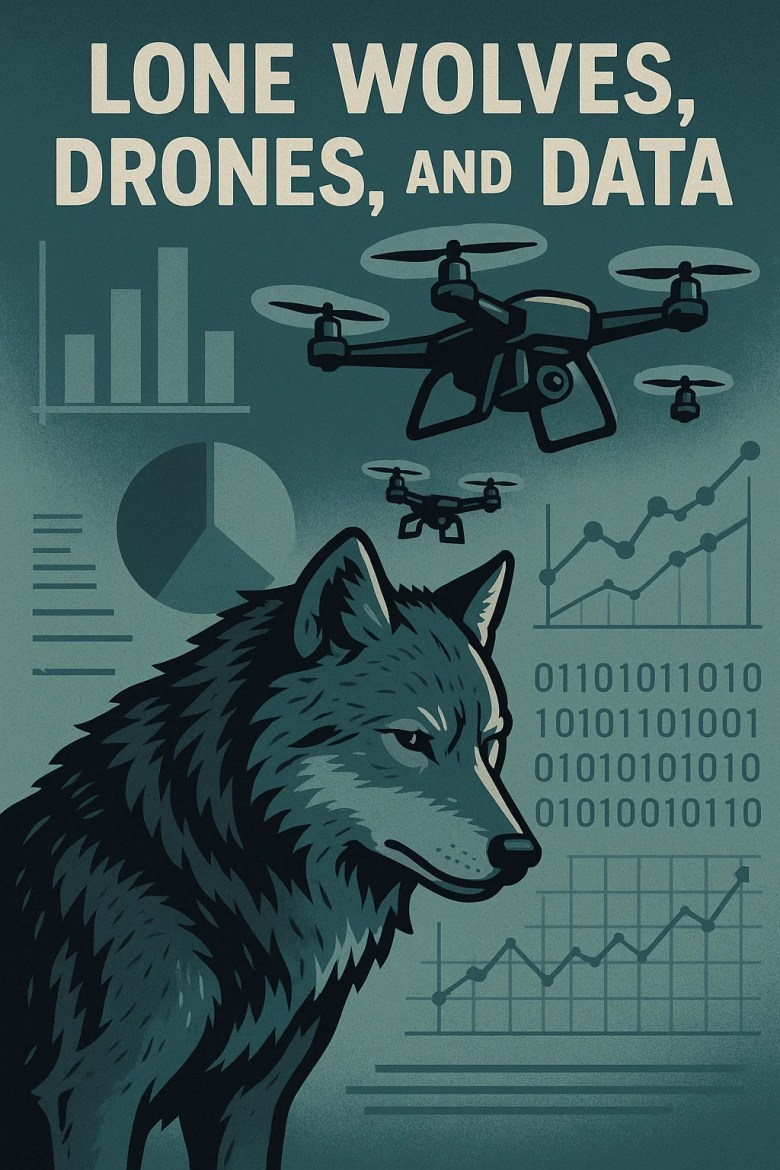
Barack Obama once admitted that lone-actor attacks are “extraordinarily difficult to prevent.” Counterterrorism officials had whispered it for years.
Gone are the sprawling networks of al-Qaeda, the intercepted calls, the cross-continental plots. Today’s attackers often radicalize alone, scrolling propaganda in dim bedrooms, invisible until the moment they act.
“They’re like ghosts in the data,” as one officer mentioned . “You only see the outlines after they’ve struck.”
Researchers note familiar fingerprints. Lone wolves favor explosives. They target abortion clinics, civilian spaces, soft sites where ordinary people bear the brunt. Their violence often echoes extremist waves even without direct ties.
Police chiefs talk about “target hardening” — cameras, barriers, locked doors. But they admit its limits. You can fortify a stadium. You can’t fortify every street corner.
Justice Manufactured

As real threats grew harder to spot, the justice system began producing its own shadows.
In 2013, a report by Human Rights Watch and Columbia Law School landed like a thunderclap. Illusion of Justice accused federal prosecutors of relying on informants who not only supplied weapons and cash but the very ideas for plots.
For one Brooklyn mother, the effect was devastating. Her son, a jobless immigrant with mental illness, was befriended by an older man at the mosque. The man brought food, slipped him money, then planted the seed of a fake FBI scheme. Today, her son is serving 25 years.
Entrapment is supposed to be a defense. In practice, it rarely works. Prosecutors cite “predisposition” — a website visited; a sermon watched — as proof of intent. Trials unfold with anonymous juries, while defendants languish in solitary for years before court.
The weight fell heavily on Muslim communities. And the effect, civil rights lawyers argue, was corrosive: each staged case deepened suspicion that counterterrorism was less about protection than performance.
Weapons of the Future
In a hangar outside Washington, a Homeland Security analyst places a drone on a table. It’s the size of a shoebox. “A $500 toy,” he says flatly, “can become a $5,000 weapon.”
This is the frontier now. Drones, once novelties, are repurposed in battlefields from Ukraine to Syria. Cheap. Accessible. Hard to track.
The other frontier is hidden data. Every click, every rant, every late-night purchase leaves a trail. Analysts sift it for “behavioral indicators” — bingeing extremist videos, sudden weapons buys, ominous manifestos.
In a high school, a teacher wonders whether a student’s angry essay is just teenage angst or something darker. In a suburban kitchen, a mother debates whether to call a hotline about her son’s posts.
The promise is prevention. The danger is profiling. And suspicion, once cast, is hard to contain.
Old Enemies, New Landscape
The lone wolves and drones don’t mean old enemies are gone.
Al-Qaeda still runs affiliates across Africa. ISIS, stripped of its caliphate, thrives online as a brand and on the ground as an insurgency. Hezbollah and Hamas remain entrenched. And in Afghanistan, the Taliban’s return has reopened a haven for extremists while closing classrooms to girls.
The map of terror hasn’t shrunk. It has splintered.

Staged Victories Abroad
Uganda offers its own warning.

Early this month, the country’s Defense Intelligence and Security agency was shaken by scandal. At least 13 suspects — including a former intelligence chief — were arrested on allegations they staged bomb scares and fake suicide plots, then blamed them on the Allied Democratic Forces (ADF).
If true, it meant some of Uganda’s most publicized terror threats were fabrications — performances staged by the very agency meant to stop them.
For citizens, the questions are chilling: What is real? What is theater? And who decides?
The Experiment in Trust
Against this backdrop, the Department of Homeland Security (DHS) is testing a new model: the Center for Prevention Programs and Partnerships, or CP3.
Unlike traditional counterterrorism offices, CP3 insists it doesn’t spy, doesn’t police, doesn’t hoard data. Its grants come with civil rights safeguards. Its projects are audited for bias. Results are posted online.
“This is about resilience, not surveillance,” one DHS official said. “If communities don’t trust us, we can’t prevent violence.”
Still, the model is fragile. Training differs by state. Law enforcement inevitably steps in when threats emerge. And communities remain wary of what some call “soft surveillance.”
Yet CP3 represents a pivot — away from courtroom stings, toward classroom interventions. Trust, not fear, is the tool here.
Fear and Trust
Two decades on, one lesson endures. Terrorism shifts shape — from networks to loners, from planes to drones, from sleeper cells to search histories. But the temptation to overreach remains constant.
A mother in Brooklyn watching her son in shackles. A Ugandan citizen reading headlines of staged bomb plots. A mosque-goer wondering if the friendly stranger beside him is a neighbor — or an informant.
Terrorism feeds on fear. Democracy feeds on trust. And when governments manufacture crimes or trade liberties for illusions of safety, they hand extremists their greatest prize: freedom surrendered in the shadows.

Beneath it all lies another driver: markets.
In fragile states, instability isn’t just tolerated. It’s lucrative. Multinational firms in oil, arms, and infrastructure cut deals with generals, not parliaments. Militaries run companies. Officers skim resource rents. Reform is resisted because instability pays.
For citizens, the cost is repression and exclusion. For elites, the reward is profit.
When markets reward conflict and militaries protect business interests, instability stops being an accident. It becomes the arrangement.
Recommended Posts


Adam is an accomplished professional with a unique interdisciplinary background: combining expertise in psychology, journalism, and restorative justice. He has a bachelor’s degree in community psychology from Makerere University Kampala, Uganda; a master’s degree in journalism from Northeastern University in the United States; and a master’s degree in restorative justice from Vermont Law & Graduate School in the United States. As a versatile communicator and advocate of social justice, Adam brings a unique perspective to his work. He is capable of fostering understanding, insight, clarity, and a commitment to meaningful change.
Email contact: adam@tranquilitynews.com


