
November 14, 2025
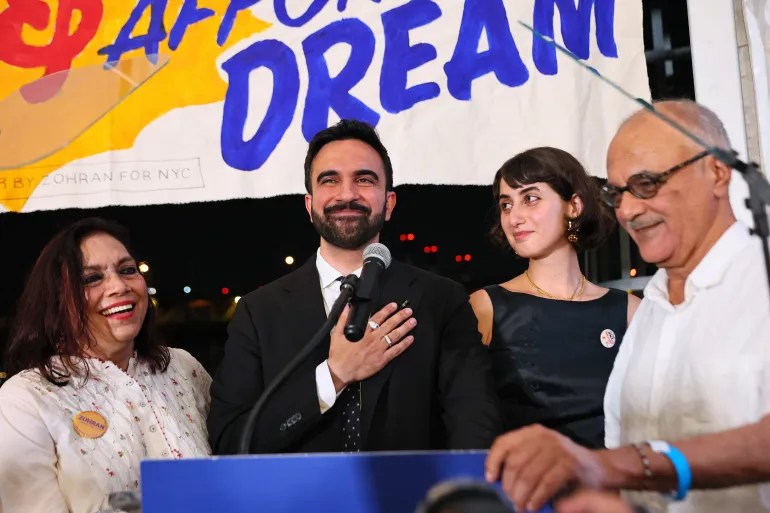
By Elvis Kintu Nsonyi,
Los Angeles
When Zohran Mamdani announced his bid for Mayor of New York City, it felt like one of those rare moments when history pauses and tilts toward youthful intellect. His story stretches far beyond Manhattan’s skyline, reaching back to the red earth of Kampala. Many Ugandans know his father, Professor Mahmood Mamdani of the Makerere Institute of Social Research at the prestigious Makerere University whose intellectual influence has shaped generations across Africa. That connection alone drew Ugandan eyes to Zohran’s campaign, stirring curiosity, nostalgia and for some, quiet pride.
As the campaign intensified, Ugandans reminisced on clips of Mamdani’s youthful hip-hop days in Kampala. When he eventually clinched victory, congratulatory messages swept across Ugandan social media platforms. Political commentators rushed to frame the win as a symbolic achievement for Uganda, speculating about what his leadership could mean for relations between New York and Kampala. Now, this is where excitement must give way to a sober reflection. Mamdani’s win, though inspiring, means nothing for Uganda and that is precisely why it matters.
Ugandans have witnessed this emotional wave before. When Barack Obama became President of the United States, many Kenyans anticipated a privileged relationship with Washington. These included special development initiatives, preferential policies or at least a symbolic geopolitical shift. None of that came to pass. Obama was elected to serve Americans and there is a system, with a vision and mission to that effect.
The same reality applies today. The people of New York chose Mamdani to fix New York, not to champion Kampala. The significance of his victory lies not in what he can deliver to Uganda but in what his journey can illuminate for Uganda.
We must learn that Mamdani’s campaign rejected the hollow theatrics that have come to dominate global politics. Where many leaders trade in fear, he offered fairness. Where others rely on slogans, he delivered substance. His agenda prioritized affordable housing, humane policing, equitable education and dignity for immigrants. These issues cut across race, class and status. This intellectual honesty resonated with working-class New Yorkers and young progressives who crave for authenticity in an era of political spectacle. His win proves that ideas, when presented with conviction, can still triumph irrespective of age.
Now, like President Obama before him, Mayor Mamdani must navigate the realities of governance. His agenda is American. His constraints are American. His successes and failures will be judged by largely New Yorkers alone.
Part of what energized his movement was his bold progressive platform which formed a social contract with the people including expanded rent control, free transit, universal childcare and ambitious housing reforms. He also pledged revenue proposals targeting corporations and the ultra-wealthy. His campaign spoke directly to families, immigrants, tenants and communities seeking a more livable city. These commitments define his mandate, not any imagined obligations to Uganda.
While Mamdani’s election will not alter Uganda’s political fortunes, it can challenge Ugandans to rethink their own. His rise holds up a mirror to our political culture, reminding us what principled and thoughtful leadership looks like and what it can achieve when nurtured rather than stifled.
Too often, Uganda’s political landscape is consumed by theatrics, intimidation and the worship of personalities over ideas. This underscores the urgent need for Ugandans to embrace issue-based politics and to invest in systems that outlive individuals.
By virtue of his new global platform, Mamdani will interact with Kampala’s Lord Mayor Erias Lukwago, a founding Board Member of the Mayors Migration Council, a Mayoral led advisory coalition committed to driving global action on migration and displacement. That intersection is symbolic because it shows how cities, not just nation-states, are shaping global leadership. However, we must know that symbolic alignment is not the same as material impact.
What Mamdani’s journey truly offers Uganda is a moral lesson. His victory demonstrates that the world still hungers for leadership grounded in truth, competence and conviction. His path from Kampala marked by a position of global influence reveals the quiet power of ideas and integrity. It reminds us that the bridge between Kampala and New York is not forged through ethnicity or nostalgia, but through values, intellect and vision.
If Uganda seeks leaders who shape history rather than exploit it, then we must build a political environment where such leaders can emerge, thrive and serve. Congratulations Mayor Zohran Mamdani.


