
November 6, 2025
By Adam Musa
Tranquility News Correspondent, North America
South Royalton, Vermont
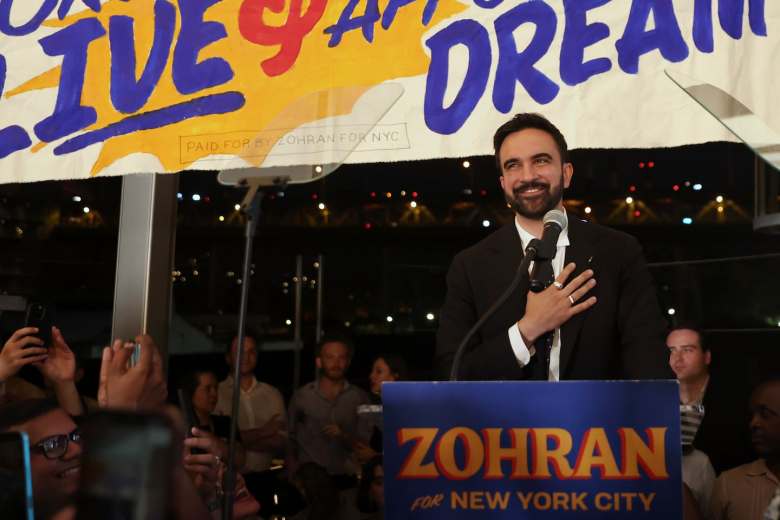
Zohran Kwame Mamdani, 34, has just made history. On Nov. 4, 2025, the democratic socialist and former New York State Assembly member was elected mayor of New York City (NYC) — the first Muslim, the first South Asian, and the youngest person in over a century to hold the office.
His rise from a Queens activist to the city’s top job signals a generational shift. Mamdani’s campaign unsettled establishment figures like Andrew Cuomo and energized a base hungry for economic and social justice. Yet governing NYC is not the same as galvanizing it. The city is the beating heart of global capitalism — a place built on exchange, ambition and unrelenting motion. Turning it toward equity will be an extraordinary test.
The Politics of Promise
Every election season, familiar refrains fill the air. Change is coming. Jobs for all. A better future. Politicians stir crowds with passion and poetry, and voters — weary but hopeful — listen once more. Then the votes are counted, the banners come down, and the promises fade into silence.
This is the crisis of modern democracy: the politics of promise without delivery.
Too often, leaders make pledges they know they cannot keep. Some do it out of populism, others because weak institutions or entrenched interests block reform. Whatever the reason, the outcome is the same — citizens are left disillusioned, and trust in democracy erodes.
When broken promises pile up, faith collapses. Voter turnout falls. Cynicism takes root. In the space where hope once lived, anger and extremism find room to grow.
From Slogans to Systems
Repairing that trust requires more than better speeches. It demands measurable progress, transparent government and citizens who demand proof, not poetry. Politics should be a service, not a performance.
A true leader is judged not by how many promises are made, but by how many are kept. Until integrity replaces illusion, the politics of unfulfilled promises will remain democracy’s quiet betrayal.
Governing in the Capital City of Global Capitalism
Few cities expose that tension more starkly than NYC. Its economy — roughly $1.3 trillion in output — is larger than that of many nations. The city’s eight million residents generate nearly as much wealth as the entire African continent, home to 1.4 billion people. That imbalance is both staggering and symbolic: one city’s prosperity mirrors another region’s struggle.
To govern here is to balance compassion with constraint.
From Protest to Policy
Mamdani’s political story has always straddled the line between activism and pragmatism. In 2021, he joined taxi drivers in a 15-day hunger strike to demand debt relief — and won. The resulting deal restructured loans and saved thousands from financial ruin.
Two years later, he helped push through a fare-free bus pilot program that cut assaults on operators and boosted ridership. It was a small but telling victory — a policy rooted in data, not just ideology.
As a legislator, he passed modest but thoughtful reforms: expanding public hearing access, modernizing administrative procedures and supporting local cultural institutions. They were not headline-grabbers, but they reflected a through line of inclusion and transparency.
The New Mayor’s Blueprint
Mamdani campaigned on an ambitious agenda: freezing rents on stabilized units, building 200,000 affordable homes, expanding fare-free buses citywide, raising the minimum wage to $30 by 2030, and offering universal childcare. He also promised city-run grocery stores in food deserts — a public option for food.
Delivering any of that will be difficult. Many levers of power lie beyond City Hall — the Rent Guidelines Board, the MTA, and the state Legislature — and new revenues will be required to sustain his plans.
The question is not whether his ideas are bold, but whether they are buildable.
The Real Test
NYC has had more than 110 mayors since 1665. Each faced the city’s contradictions: immense wealth alongside staggering inequality. Mamdani inherits both, with the added weight of symbolism — a young, immigrant from Africa, Muslim, South Asian mayor promising justice in the global capital of capitalism.
Now, rhetoric must give way to results. His success will depend less on ideology than on sequencing — choosing early, winnable battles that prove government can still deliver. If he can translate protest into pragmatic governance, he may redefine what progressive leadership looks like in America’s hardest city to govern.
If not, he will join the long list of leaders who mistook applause for accomplishment
Recommended Posts


Adam is an accomplished professional with a unique interdisciplinary background: combining expertise in psychology, journalism, and restorative justice. He has a bachelor’s degree in community psychology from Makerere University Kampala, Uganda; a master’s degree in journalism from Northeastern University in the United States; and a master’s degree in restorative justice from Vermont Law & Graduate School in the United States. As a versatile communicator and advocate of social justice, Adam brings a unique perspective to his work. He is capable of fostering understanding, insight, clarity, and a commitment to meaningful change.
Email contact: adam@tranquilitynews.com


