
Why can’t we live the life of Judge Frank Caprio?
August 30, 2025
By Elvis Kintu Nsonyi,
New York
Last week, the world quietly lost a giant. Judge Frank Caprio—known globally as the “nicest judge in the world”— passed away, leaving behind not just a legacy in law, but a legacy in love. As we mourn his passing, a deeper question lingers: why can’t we all live like Judge Caprio?
Judge Caprio wasn’t celebrated merely for his legal mind. He was loved for how he judged. In a courtroom system that often strips away humanity, he dared to bring in compassion, humor, and heart. Watching clips from his sessions on Caught in Providence, I wasn’t drawn to legal precedent but to moral clarity. He listened to people accused of minor infractions as though their future mattered—because it did. Many walked away not just with reduced fines, but with their dignity intact. That’s rare.
In his death, we are reminded to reflect on life. And one question haunts me: why is it so difficult for our institutions, our communities, and even our own hearts to prioritize empathy, fairness, and understanding?
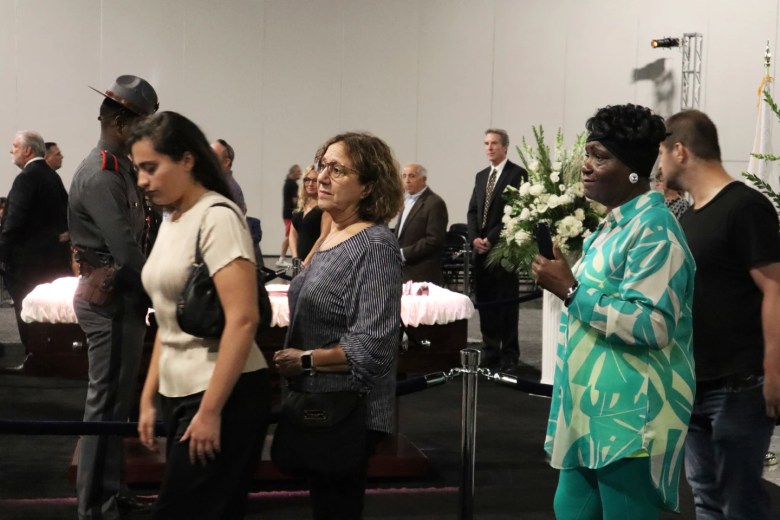
Judge Caprio embodied a simple but radical call: “Be the good you wish someone had been for you.” He showed us a justice system with a face, a pulse, a soul. In the statement announcing his passing, one line stood out: “In his honor, may we each strive to bring a little more compassion into the world just as he did every day.” It sounds simple, but it isn’t—because honestly, we are not all like him. Why?

Our systems are not built for compassion. Whether in law, politics, education, or health, institutions prize efficiency, control, and order—not kindness. Judge Caprio operated within the same system, but he pushed its limits with humanity. That takes courage, and courage is rare.
Too often, punishment overshadows understanding. Justice is reduced to retribution instead of restoration. Yet Judge Caprio dared to flip that script. He forgave, he listened, and he gave people the benefit of the doubt. He offered grace not because he was soft, but because he was strong enough to see the person behind the offense.
I contrast that with how political prisoners of conscience in Uganda—like Dr. Kizza Besigye, Hajji Obed Lutale, Eddie Mutwe, Achileo Kivumbi, among others—are treated. They are denied bail, denied compassion, denied even the presumption of innocence. This is the kind of justice system Judge Caprio spent his life quietly challenging, one small act of kindness at a time.
To live like Judge Caprio is not easy. It demands more listening than talking. It requires asking why before passing judgment. It means choosing mercy over convenience, fairness over force. And it is exhausting—emotionally, mentally, and spiritually.
We live in a divided world where many fear that compassion is weakness. But Judge Caprio proved the opposite. Compassion is strength. It takes power to care when it’s easier not to.
We may never wear a robe or sit on a bench, but we pass judgment every day—at home, at work, online, and in the streets. In every moment, we can choose to judge with empathy, to give others the benefit of the doubt, to help instead of harm, to be fair even when no one is watching. That is how the world truly changes. Not through speeches or grand plans, but through small acts of justice done with love.
We don’t need to be a judge to live like Judge Caprio. We just need a heart big enough to care—even when it’s inconvenient. His life was not a performance but a blueprint: a reminder that we all hold the power to restore dignity to someone else’s day.
So the question isn’t only why we can’t live like Judge Caprio. The real question is: what’s stopping us? Let us each, in our own way, become keepers of that legacy. May we judge less and understand more. May we lift others where we could easily pass them by. And may we never forget: the law may be blind, but justice sees best when it sees with the heart.


