
Sub-Saharan Africa’s vegetable varieties backed up in Norway
The seed preservation at the World Vegetable Centre in Arusha, Tanzania, and at the Svalbard Global Seed Vault, Norway, is said to be a strategic investment in future food security.
SUTARDAY September 27, 2025
By Patty Magubira
The Tranquility News Reporter, Tanzania
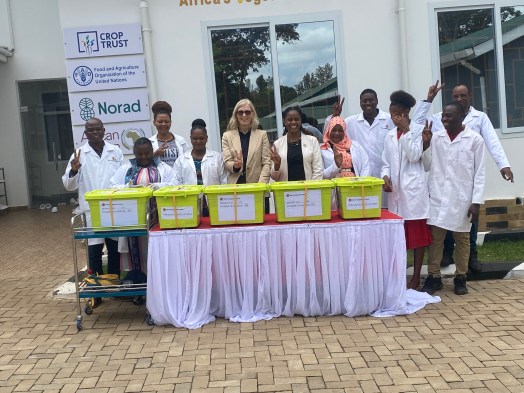
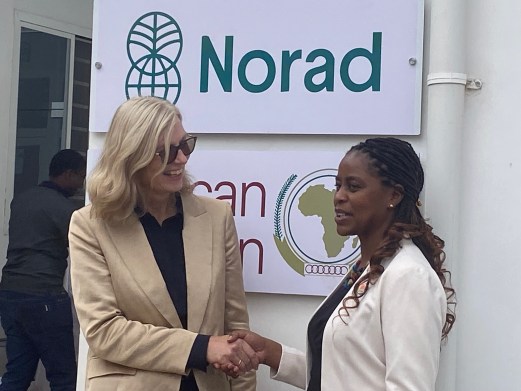
Norwegian Ambassador to Tanzania, Tone Tinnes, observed as approximately 3,000 seed accessions were dispatched from the World Vegetable Centre (WorldVeg) in Arusha to be stored at the Svalbard Global Seed Vault in Norway.
This facility maintains seeds at a stable temperature of -18 degrees Celsius, safeguarding them for future needs.
Currently, the Vault houses over 1.3 million seed samples globally, with additional capacity for millions more.
It serves as a repository to secure the world’s food supply by preserving critical crop varieties, thereby supporting future generations facing challenges such as climate change and population growth.
WorldVeg, which specializes in vegetable research, is advancing this aim through a Sh1.6 billion initiative dedicated to securing Africa’s rich and nutritious vegetable varieties.
This initiative is funded by the Norwegian Agency for Development Cooperation (NORAD) under the FAO’s plant genetic resources treaty.
Named “Rescue, Conservation, and Use of African Vegetable Biodiversity,” the project focuses on preserving and replicating seeds at Svalbard, thus enhancing food security, stimulating job creation, and fostering stronger resilience in Tanzania and the broader region.
By year-end, 3,000 varieties from Tanzania are expected to be securely replicated in Svalbard.
Prior to the seeds’ departure, Ambassador Tinnes toured WorldVeg’s genebank and fields, which preserve more than 10,500 African vegetable seed varieties.
She commended the effort for bolstering food security, job generation, and empowering youth and women in both Tanzania and sub-Saharan Africa.

Ambassador Tinnes highlighted that seed preservation in Arusha and Svalbard represents a strategic investment in future food security.
Country Programme Manager for WorldVeg Colleta Ndunguru explained plans to provide 1,000 seed kits annually to small-scale farmers across sub-Saharan Africa, facilitating the growth of nutritious and resilient crops. She emphasized the vital role of robust collaborations in conserving vegetable biodiversity and fostering innovation in vegetable research.
This seed conservation effort highlights the strong partnership between Tanzania and Norway and reaffirms Tanzania’s dedication to biodiversity preservationΩ
Recommended Posts


The Tranquility News Reporter/Sub Editor, Tanzania
Patty Magubira is an experienced environmental and business editor whose career started at the Tanzania's state-owned newspaper - The Daily News. He is a man of perfection. Aided by his extensive training as a community forestry expert before joining Tanzania School of Journalism. Magubira had successfully held various key posts in newsrooms, giving him an unmatched connections in media fraternity. Having worked as a bureau chief in Arusha and Mwanza, he managed to build a team work, boosting sales to the highest level ever. He was then promoted to a sub-editor after completing a training in Nairobi, Kenya. His incredible experience, critical thinking and exposure are critical to the quality of any media outlet.


