
July 9, 2025

By Adam Musa
The Tranquility News Correspondent, North America
Order. Law. Justice; and Peace. These are the cornerstones of any functioning society —interconnected, fragile, and too often elusive in the Great Lakes region of Africa.
On June 27, 2025, a historic peace agreement was signed between the Democratic Republic of Congo (DRC) and the Republic of Rwanda at the White House. U.S. Secretary of State Marco Rubio presided over the ceremony, flanked by President Donald Trump. The agreement was signed by Foreign Ministers Thérèse Kayikwamba Wagner (DRC) and Olivier Nduhungirehe (Rwanda), with hopes of ending decades of devastating conflict in eastern Congo.
President Trump called it “a glorious triumph for the cause of peace,” adding that the region now “begins a new chapter of hope and harmony.”

But beyond the handshakes and headlines, a pressing question lingers: Is this truly a turning point—or just another chapter in a history of broken promises?
Unanswered Questions
The agreement promises peace and progress, but many remain skeptical. Is this a blueprint for sustainable transformation—or merely a tactical pause in a recurring cycle of violence?
Psychologist Edward Thorndike’s “law of effect” tells us that positive outcomes reinforce behavior. Yet in the DRC, more than a dozen peace agreements have failed, each collapse followed by renewed chaos. History, it seems, has not been a good teacher.
Recurring Patterns, Unresolved Roots

Journalist Michela Wrong once wrote in In the Footsteps of Mr. Kurtz: “No man is a caricature; no individual can alone bear responsibility for a nation’s collapse.”
DRC’s instability is not the result of a single villain, but a complex web of domestic dysfunction and foreign interference. Armed militias—over 100 by some estimates—continue to wreak havoc in the eastern provinces. Rwanda, Uganda, Burundi, and others have been repeatedly accused of fueling this instability through covert support of these groups.
Notably, some of the most powerful actors—including Rwanda-backed factions—were absent from the negotiating table. That omission casts a long shadow over the agreement’s legitimacy.
The Colonial Legacy That Won’t Fade
According to the United Nations, DRC’s instability is rooted in post-colonial fractures: ethnic conflict, political fragmentation, and relentless resource extraction. Provinces like North Kivu, South Kivu, Ituri, and Tanganyika remain engulfed in violence.
Even state actors—such as DRC’s military (FARDC) and international peacekeepers (MONUSCO)—have faced credible allegations of collaboration with armed groups, eroding public trust in peacekeeping itself.
A Vacuum of Rights and Justice
Legal scholar Raymond Wacks categorizes human rights into three generations:
- Civil and political rights – like freedom of speech and fair trials
- Socio-economic rights – such as education and healthcare
- Collective rights – including peace, security, and a clean environment
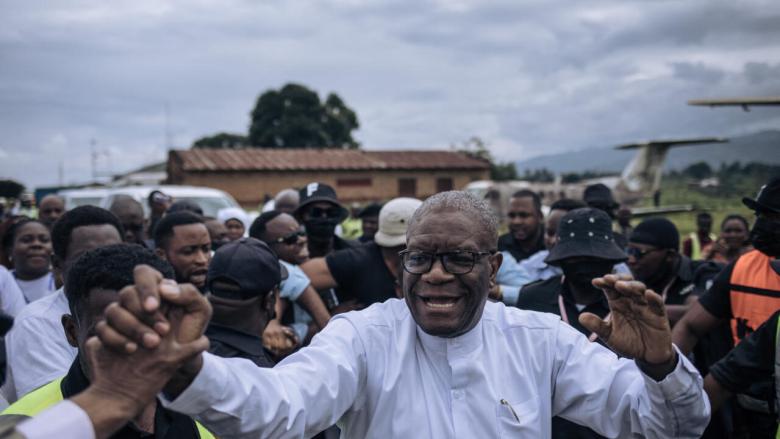
Critics argue this agreement addresses none of them in depth. Dr. Denis Mukwege and organizations like Physicians for Human Rights highlight a critical void: justice for victims—particularly survivors of sexual violence—is absent from the text. Without justice, peace remains cosmetic.
The Road Ahead
- What role has U.S. foreign policy played in shaping the terms—and priorities—of this deal?
- Who ensures compliance if either party breaks the terms?
- What mechanisms will monitor implementation—and who controls them?
- How will local communities be included in reconciliation and recovery efforts?
- Will armed groups remain spoilers, or be given a path to demobilization and reintegration?
The United States Institute of Peace reminds us: peace agreements often fail not because of ill will, but due to weak institutions and insufficient political resolve.
History is littered with failed accords—from Mali’s Bamako Accord to earlier DRC treaties—where key stakeholders were sidelined. The current agreement risks a similar fate by excluding major combatants and community voices. A deal without full buy-in is a deal in name only.
Who Benefits?
While humanitarian motives may dominate headlines, strategic interests loom large. The Trump administration’s support aligns with U.S. ambitions in securing access to DRC’s vast reserves of cobalt and other critical minerals.
Qatar’s growing influence in Rwanda also suggests deeper geopolitical shifts. Peace, it seems, has many sponsors—and not all of them are neutral.
The Declaration of Principles: Promise or Performance?
The declaration signed on April 25, 2025, outlines key commitments:
- Mutual respect for sovereignty
- Ending support for armed groups
- Joint security coordination
- Protection and return of displaced people
- Continued MONUSCO assistance
- Economic cooperation and U.S. investment
Yet, even as these principles were inked, fresh fighting erupted in North Kivu—casting immediate doubt on the agreement’s enforceability.
The Colombia Comparison
DRC’s situation bears more resemblance to Mali—fragmented governance, low public trust, and the marginalization of key actors—than to Colombia’s peace success.
What made Colombia different? Inclusion. Accountability. Local ownership. All of which are still missing from the DRC-Rwanda agreement.
More Than a Border Dispute

with capital Kinshasa
As Kwame Nkrumah warned, “Until the DRC settles, Africa will never be at ease.” A nation the size of Western Europe, with unparalleled natural wealth, cannot be stabilized through symbolic diplomacy. It requires vision, trust, and bold leadership—both local and international.
Albert Einstein cautioned, “Peace cannot be kept by force; it can only be achieved by understanding.”
Roscoe Pound insisted, “The law must be stable, but it must not stand still.”
And Theodore Parker offered hope: “The arc of the moral universe is long, but it bends toward justice.”
Yet Hobbes’ warning remains urgent: Without order, life becomes solitary, poor, nasty, brutish, and short.
In nutshell, peace is not forged in a ballroom or a press release. It is built—deliberately, inclusively, and painfully—through truth, justice, and shared purpose. Unless this agreement confronts the root causes of violence and gives voice to victims and communities, it may become yet another chapter in DRC’s long story of peace postponed.
Recommended Posts


Adam is an accomplished professional with a unique interdisciplinary background: combining expertise in psychology, journalism, and restorative justice. He has a bachelor’s degree in community psychology from Makerere University Kampala, Uganda; a master’s degree in journalism from Northeastern University in the United States; and a master’s degree in restorative justice from Vermont Law & Graduate School in the United States. As a versatile communicator and advocate of social justice, Adam brings a unique perspective to his work. He is capable of fostering understanding, insight, clarity, and a commitment to meaningful change.
Email contact: adam@tranquilitynews.com


