
China’s universities cut 12,000 ‘obsolete’ degrees amid race to embrace AI era
The sweeping overhaul has affected more than 30 per cent of China’s degree programmes, with arts and languages increasingly giving way to technology-focused fields. Why it matters for Tanzania
SATURDAY June 27, 2026

By Adam Ihucha
Tranquillity News Correspondent, Tanzania
China’s decision to scrap more than 12,000 university degree programmes sends a powerful signal to students, parents, and policymakers far beyond its borders.
For Tanzania, it raises an important question: Are today’s university graduates being equipped for tomorrow’s labour market?
The lesson is not that arts, humanities or social sciences are becoming irrelevant.
Rather, it is that a degree alone is no longer enough. Around the world, employers are placing greater value on digital literacy, data skills, problem-solving ability, and adaptability as artificial intelligence reshapes industries and automates routine tasks.
The traditional pathway — earning a degree, securing a matching job, and remaining in the same profession for decades — is rapidly disappearing.
In its place is a labour market that rewards continuous learning and the ability to acquire new skills throughout one’s career.
As Tanzania seeks to industrialise, modernise agriculture, and expand its digital economy, students should pay close attention to fields expected to drive future growth.
These include artificial intelligence, data science, software engineering, cybersecurity, renewable energy, agricultural technology, biotechnology, healthcare, logistics, and financial technology.
But choosing a technology-related degree alone will not guarantee success.
The most employable graduates will be those who combine specialised knowledge with practical skills and digital competence.
A journalism student, for example, should understand data analysis, digital storytelling, and AI-powered research tools.
Lawyers will increasingly need expertise in technology regulation and data privacy.
Agricultural specialists must embrace precision farming and digital agriculture.
Business graduates will need strong capabilities in data analytics, automation and digital finance.
Equally important are skills that machines struggle to replicate: Critical thinking, creativity, communication, leadership, emotional intelligence, and entrepreneurship.
As AI takes over repetitive tasks, these uniquely human capabilities are likely to become even more valuable.
“The old path — where you study one specific major, find a perfectly matched job, and stay in it for a lifetime — simply does not exist anymore,” Vincent Zhao, owner of a media production company in Beijing, China.
The lesson from China is not that every student should rush into computer science.
Economies will continue needing teachers, medical doctors, lawyers, engineers, accountants, artists, and social scientists.
The challenge is ensuring that every profession evolves alongside technological change rather than being overtaken by it.
For Tanzania and the wider East African region, the most important takeaway may be that higher education should prepare students not merely for their first job, but for careers that will likely change several times over the course of their working lives.
In the AI era, the graduates who thrive will not necessarily be those with the most specialised degrees, but those who can continuously learn, adapt, and apply their knowledge to solve real-world problems.
China’s universities are undertaking a massive reshuffling of their academic offerings as part of a drive to better align higher education with the nation’s development goals — culling thousands of so-called obsolete degrees in favour of new, technology-focused programmes.
The sweeping campaign comes as China races to become a global leader in a range of high-tech ‘future industries’ while also tackling a graduate employment crisis that has left millions of young people struggling to find work.
According to the South China Morning Post, between 2021 and 2025 China’s higher education institutions revoked or suspended 12,200 undergraduate degree programmes while introducing 10,200 new ones.

Ministry of Education data cited by Xinhua shows that more than 30 per cent of university programmes nationwide underwent some form of adjustment.
The cuts have been concentrated in arts, humanities, foreign languages and management — fields increasingly viewed as oversupplied or less aligned with China’s future economic priorities.
The changes come as youth unemployment remains a major challenge and the labour market undergoes rapid transformation driven by artificial intelligence.
Many of the new programmes, meanwhile, are closely aligned with Beijing’s industrial strategy.
Nine universities have introduced majors in embodied intelligence, supporting a national push to accelerate the integration of next-generation AI technologies into the real economy.
Universities have faced growing pressure to respond to shifts in China’s economy, as record numbers of graduates enter the labour market while employers increasingly demand specialised technical and digital skills.
The University of Shanghai for Science and Technology, for example, halted admissions to its product design programme this year.
One recent graduate said the decision reflected worsening employment prospects in the field.
The rapid development of AI has hit product design hard, many core tasks, such as modelling and rendering, can now be handled by AI,” Anonymous graduate.
“The rapid development of AI has hit product design hard,” said the graduate, who requested anonymity due to the sensitivity of the issue. “Many core tasks, such as modelling and rendering, can now be handled by AI.”
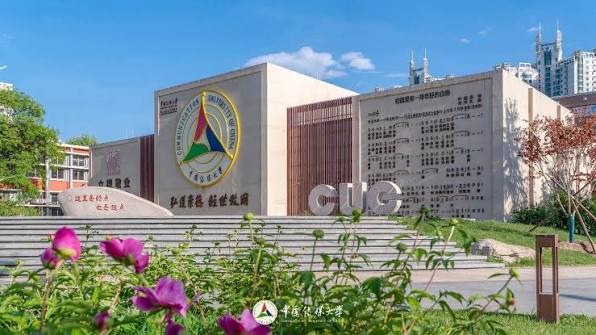
The Communication University of China, a prestigious media-focused institution in Beijing, has also restructured several programmes, including cinematography, which has been merged with a broader film and television production programme.
Alumni say the consolidation reflects technological and market realities.
Song Song, a videographer who graduated from the university’s cinematography programme in 2012, said his studies coincided with the industry’s transition from film to digital production.
“With the rise of live streaming and short videos, the requirements for a cameraman are completely different from traditional television news shooting,” Song said. “Changes in education are absolutely necessary.”
Some education experts, however, argue that replacing one major with another is only a short-term solution.
Deeper structural reforms may be needed to help universities keep pace with accelerating technological change.
Chu Zhaohui, a senior researcher at the National Institute of Education Sciences, noted that some of the programmes now being eliminated were themselves introduced only a few years ago as part of earlier reform efforts.
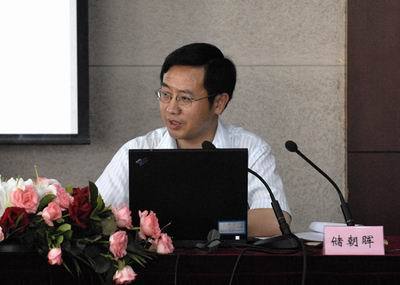
Rather than continually creating and abolishing degree programmes, Chu argues that universities should adopt more flexible academic models that give students greater freedom to build their own combinations of courses.
“This would allow them to select courses based on their personal interests, unique strengths, and career aspirations, ultimately building their own distinctive intellectual profile,” Chu said.
As labour markets become increasingly unpredictable, many Chinese families are beginning to view an undergraduate degree as the starting point of a lifelong learning journey rather than a direct pathway into a single profession.
Vincent Zhao, who runs a media production company in Beijing, encouraged his daughter to pursue studies in statistics and data governance when she entered university last year.
“We focused on choosing a broad direction that aligns with what she likes and excels at, leaving room for either future postgraduate studies or employment,” Zhao said.
“The old path — where you study one specific major, find a perfectly matched job, and stay in it for a lifetime — simply does not exist anymore.”
Recommended Posts


Adam Ihucha is a prominent Tanzanian journalist and author recognized for his extensive coverage of tourism, wildlife conservation, and economic issues in East Africa. Based in Arusha, he serves as a senior correspondent for The Tranquility News and is a long-time contributor to eTurboNews (eTN), where he provides global insights into Tanzania's travel industry.
Throughout his career, Ihucha has written for several major publications, including The Guardian (Tanzania) and The EastAfrican. His work frequently highlights the intersection of environmental conservation and economic development, covering critical topics such as anti-poaching initiatives, national park management, and regional trade within the East African Community. His journalism is noted for its advocacy for sustainable tourism and its role in documenting the achievements of Tanzania's tourism sector.
Email contact: ihucha@tranquilitynews.com


