
January 5, 2026
By Adam Musa
The Tranquility News Correspondent, North America
Boston, Massachusetts
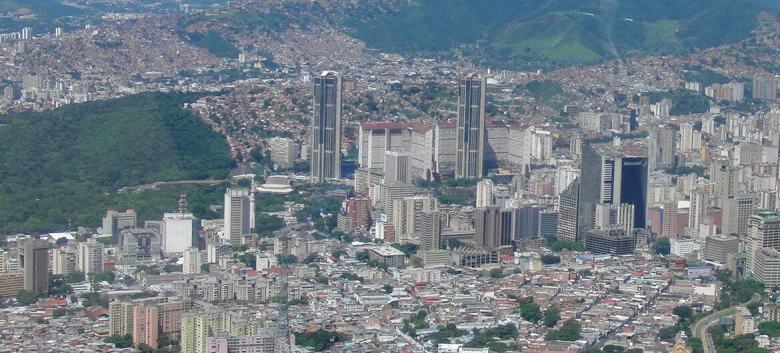
At first, Caracas, Venezuela sounded normal.
A city that has learned to live with shocks — blackouts, rumors, food lines that begin before dawn — does not announce every crisis with sirens. Sometimes it announces it with the opposite: a strange steadiness, the quiet you hear when everyone is waiting for the same message on the same cracked phone screen.
By Saturday morning, Jan. 3, 2026, the message was already everywhere, moving faster than official confirmation ever could. U.S. forces, according to U.S. officials and news reports, had raided the Venezuelan capital and captured President Nicolás Maduro. He had been flown to the United States and placed in federal custody in New York, expected to appear in court on drug-trafficking conspiracy charges.
For Venezuelans, this was the sort of development that sounds less like politics than like weather — sudden, total, beyond appeal. It did not answer any question so much as reorder them. The familiar arguments returned instantly: Is it legal? Is it moral? Is it real? But in the first hours after a leader is removed, legality is not the only measure of power. Often, it is not even the most important one.
The future of Venezuela now depends on an institution that rarely gives interviews, rarely offers clarity, and rarely loses.
It depends on whether the military holds.
That question can sound too narrow for a country that has been slowly coming apart in public: inflation that turned salaries into jokes, a migration crisis that hollowed neighborhoods, protests that rose and fell like seasons. But revolutions — and counterrevolutions — are seldom decided by the passion of crowds. They are decided by the men and women in uniform, by the commanders who calculate what the next week will cost, and by the security services that decide whether a new order can keep its promises better than the old one did.
To outsiders, Maduro’s removal looks like a climax. To the armed institutions that protected him, it may look like an audit.
The regime that became a system
Maduro’s government survived the kind of pressure that topples more “legitimate” states. It survived because it gradually became something that resembled a system more than a presidency — an arrangement of incentives, protections, and fears that tied the security services to the state’s remaining sources of wealth.
In Venezuela, loyalty has not been merely ideological. It has been logistical. It has lived in pay, promotions, access — sometimes to scarce goods, sometimes to profitable chokepoints, sometimes to something as basic as permission to remain safe. Over time, the military and security apparatus became intertwined with governance itself: not simply defending the state but participating in it, managing parts of the economy, policing distribution, controlling borders, tracking opponents.
This is one reason the sudden removal of a leader is not the same thing as a transition. The removal creates a vacuum at the top, but vacuums are filled by what already exists. A person can vanish overnight. A network does not.
If Maduro is gone, the relevant question is whether the institutions that made his rule durable can reconstitute themselves around a successor — or whether the force that held them together was more personal than it seemed.
The hinge moment is often hesitation
One of the least romantic truths about political upheaval is that collapse can begin quietly.
In Revolutionary Strategy: A Handbook for Practitioners (1991), analyst Ernesto F. Betancourt argued that military loyalty functions as a “hinge” variable in revolutionary moments. His insight was not that armies always mutiny dramatically. More often, they hesitate. They delay. They quietly stop doing the hardest things a regime asks of them — firing into crowds, risking international sanctions, taking personal responsibility for repression — when they sense the leader may no longer be able to protect them.
From the street, those shifts can look like confusion. From inside a command structure, they are an early form of decision.
Betancourt’s framework helps explain why uprisings that feel similar can end differently. In one place, a dictator falls because soldiers withdraw support. In another, protests dissipate because the security services remain cohesive enough to absorb the moment, to wait it out, to raise the costs of defiance until fatigue wins.
The textbook cases have become part of global political memory. Cuba in 1958 and 1959, when the perception of Batista’s waning viability mattered almost as much as battlefield defeats. Egypt in 2011, when the military’s pivotal move was not ideological defection but non-repression — a withdrawal from Mubarak that preserved the institution. Tunisia’s early 2011, when a politically marginal military’s refusal to become a blunt instrument created room — briefly — for politics to do what force often prevents. Uruguay’s early 1970s, when cohesion and a self-image as defender of “order” helped smother insurgency.
Venezuela, for more than a decade, seemed to belong in the category of durable coercive loyalty. Despite economic collapse and international isolation, the armed forces remained bound up with the state in ways that made defection costly and risky. The system did not require popular consent; it required internal cohesion.
Maduro’s capture is a test of whether that cohesion was loyalty to a person, or loyalty to a structure.
The international argument is real. It is not the only one
Within hours, the international debate arrived on schedule.
At the United Nations and in foreign ministries, the familiar vocabulary of crisis reappeared: sovereignty, precedent, international law. Allies and adversaries began treating the raid as either a triumph of justice or a dangerous violation. That debate matters, because law is a kind of signal. It tells armed institutions what kind of world they are operating in, and what kind of protection they can expect.
But the armed institutions inside Venezuela will interpret the operation in a more intimate way: not as a legal argument, but as a message about vulnerability.
If a sitting president can be seized in his own capital, what does that imply about the security services that failed to prevent it? Were they overwhelmed? Betrayed? Penetrated? And, crucially, what does it imply about their ability to protect themselves in the next phase?
A regime’s security services do not only enforce loyalty; they demand it, in the form of guarantees. They need to believe that the system can keep its people safe — safe from prosecution, safe from vengeance, safe from becoming the symbolic sacrifice offered to stabilize the new order.
Foreign pressure, in this sense, often matters less as a trigger than as a modifier. It changes the expectations of insiders about who will win and what the price of being on the losing side will be. It tells commanders whether they should cling tighter or look for an exit ramp.
Exit ramps are the hidden architecture of transitions. Without them, elites often fight to the end because the end looks like prison.
What a transition looks like before it has a name
If you are waiting for a clear sign that Venezuela has entered a new era, you may be disappointed. Early transitions are rarely tidy. They are often marked by competing claims, public confusion, institutional theater. You may see new slogans without new rules. You may see new faces without new restraints.
The indicators that matter most in the first week are likely to be boring — and decisive.
Watch whether the senior command speaks with one voice, or whether multiple centers of authority emerge. An armed institution that stays unified can impose stability, even if that stability is coercive. A fractured one can create a competition of force.
Watch whether the mechanisms of patronage continue. Do salaries arrive? Do benefits remain? Do promotions proceed? Does the state still feed the people who guard it? Regimes have survived astonishing legitimacy crises because they continued meeting the material expectations of the security apparatus.
Watch whether foreign allies withdraw, double down, or bargain. A sudden shift in external backing can cause internal shifts that are rarely announced in public. People in power read foreign statements like forecasts.
Watch, above all, for the quiet signs of noncompliance: orders that are not carried out; arrests that are not made; security operations that become oddly cautious; commanders who begin to hedge their words. Revolutions sometimes happen not when the crowd gets louder, but when the police get quieter.
These are the mechanics behind the scenes of moral theater. They determine whether the country moves toward negotiated settlement, authoritarian continuity under new management, or a struggle among factions — each claiming legitimacy, each claiming to be the last barrier against chaos.
The tragedy of confidence
There is another risk in this moment, one that extends beyond Venezuela and beyond the immediate legality of the raid.
In Toward Democracy, historian James T. Kloppenberg described democracy’s “tragic irony”: movements launched in the name of renewal can corrode the norms — restraint, reciprocity, legitimacy — that make democratic life possible. The danger is not only hypocrisy. Often it is certainty: the confidence that one’s ends justify exceptional means, and that the exceptional can be put back in its box after victory.
The raid that removed Maduro may be defended as justice, or condemned as aggression. But whichever moral frame you prefer, the reality is that it shifts the definition of what powerful states can do to weaker ones, and what future leaders can claim as precedent when they decide that law is inconvenient.
Inside Venezuela, this dynamic has its own domestic form: the temptation to treat the moment as a blank check. For those who opposed Maduro, a sudden rupture can feel like liberation from restraint. For those who served him, it can feel like proof that survival requires abandoning restraint first. In both cases, the lure is the same: to replace rules with confidence.
Confidence is contagious. It is also a poor substitute for legitimacy.
Caracas may remain quiet for stretches in the coming days. Officials may offer statements. Foreign governments may argue. The opposition may mobilize. The armed forces may parade unity.
None of that will answer the question that matters most.
Whether Maduro’s removal becomes a footnote, or a hinge moment will depend on what happens inside the security apparatus that long functioned as the regime’s spine: whether it can hold together under new leadership, whether it believes it can be protected in a new order, whether it sees a path that does not end in punishment.
A city can be quiet for many reasons. Sometimes it is because a crisis has passed. And sometimes it is because everyone is listening for the same sound: not the roar of a crowd, but the click of a chain of command settling into place.
Recommended Posts


Adam is an accomplished professional with a unique interdisciplinary background: combining expertise in psychology, journalism, and restorative justice. He has a bachelor’s degree in community psychology from Makerere University Kampala, Uganda; a master’s degree in journalism from Northeastern University in the United States; and a master’s degree in restorative justice from Vermont Law & Graduate School in the United States. As a versatile communicator and advocate of social justice, Adam brings a unique perspective to his work. He is capable of fostering understanding, insight, clarity, and a commitment to meaningful change.
Email contact: adam@tranquilitynews.com


